

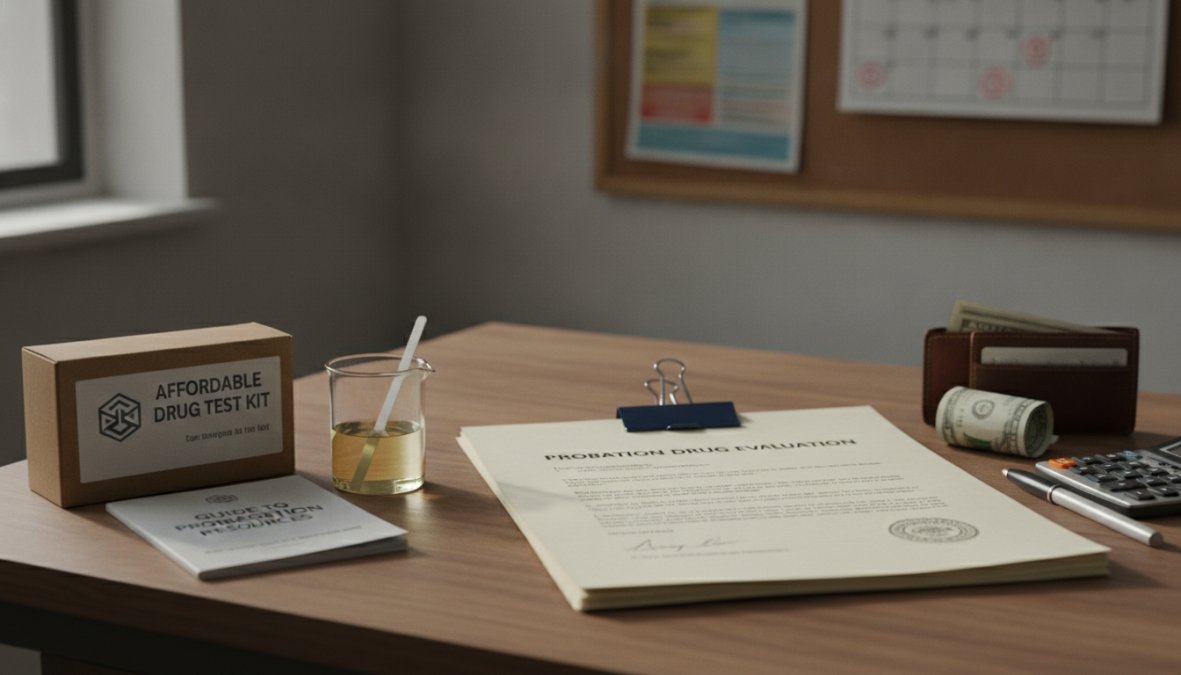
Affordable Drug Evaluation for Probation: A Complete Guide
Learn how to find affordable drug evaluations for probation. Understand costs, timelines, preparation tips, and how to access court-approved evaluators.
Last Updated: June 21, 2026
Finding an affordable drug evaluation for probation is time-sensitive, and most people don’t know where to start. This guide walks you through what the process involves, how to keep costs manageable, what your rights are, and how to find a court-approved provider. Below, we’ll show you exactly how to prepare, what documentation you need, and why an online substance abuse evaluation can be faster and more accessible than the traditional route.
A substance abuse evaluation is a clinical assessment conducted by a licensed or certified evaluator to determine whether an individual has a substance use disorder and what level of care is appropriate. The assessment uses standardized tools aligned with ASAM criteria (American Society of Addiction Medicine criteria) and produces a compliance report submitted to the court, probation officer, or licensing board.
According to SAMHSA’s guidance on substance use disorder treatment, court-ordered evaluations are one of the primary entry points into the treatment system for individuals involved in the criminal justice system.
Why Court-Ordered Drug Evaluations Are Required
Courts require a substance abuse evaluation so judges can make informed sentencing or supervision decisions based on objective clinical data. Court-ordered evaluations are typically required following a DUI or DWI charge, as a condition of probation, for license reinstatement, as part of a diversion program, or for DOT SAP compliance.
The legal requirements vary by state, but courts consistently require a state-approved, court-accepted clinical assessment that follows recognized diagnostic standards. Many probation orders specify that the evaluator must hold specific credentials, such as IC&RC board certification. Submitting a report from an uncertified provider can result in rejection, requiring you to start over.
Submitting a report from a non-approved provider is one of the most common and costly mistakes in this process. Always verify that your evaluator is state-approved and court-accepted before scheduling.
Court Ordered Drug and Alcohol Evaluation Cost: Finding Affordable Options
The cost of a court-ordered evaluation varies depending on provider type, location, and whether the assessment is conducted in person or via telehealth. Online evaluations tend to be more accessible on both cost and scheduling.
DrugEval.com offers transparent pricing through its pricing page, with a fast-track, 100% online process that eliminates overhead costs associated with brick-and-mortar providers. You can book an evaluation appointment in 60 seconds.
Financial Assistance and Sliding Scale Programs
Cost should not be a barrier to meeting your legal requirements. Several options exist for individuals who cannot afford standard evaluation fees:
- Sliding scale fees: Many certified evaluators adjust fees based on documented income.
- State-funded programs: Some states allocate funding specifically for court-ordered substance abuse evaluations for low-income defendants.
- Nonprofit and community organizations: Community mental health centers frequently offer clinical assessments at reduced rates.
- Payment plans: Some providers offer installment options so the full cost doesn’t hit at once.
Many people pay full price simply because they didn’t inquire about alternatives.
How Long Does a Drug Evaluation Take?
A drug evaluation typically takes between one and two hours from start to finish. The process breaks down into three phases:

Start by reading your court order or probation conditions carefully. The order will specify what type of evaluation is required, whether it must be conducted by a state-approved provider, and the deadline for submitting the compliance report.
How to prepare comes down to a few concrete actions:
- Gather all required documentation before your appointment
- Be honest during the assessment interview: evaluators are clinicians, not law enforcement
- Know your substance use history: dates, substances, frequency, and any prior treatment
- Understand what the evaluation is for: court, probation compliance, DUI assessment, DOT SAP, or license reinstatement
- Confirm your provider is certified and court-accepted before the appointment
Honesty deserves emphasis. A common mistake is minimizing substance use history during the interview. Evaluators are trained to identify inconsistencies, and a report that doesn’t reflect your actual history can create problems both clinically and legally.
Bring a copy of your court order or referral document to your evaluation appointment. Many evaluators need to reference the specific legal requirements to ensure the compliance report addresses what the court is asking for.
Documentation Checklist for Your Assessment
Use this checklist to ensure you arrive prepared:
- Government-issued photo ID (driver’s license, state ID, or passport)
- Copy of your court order, probation conditions, or referral letter
- Insurance card (if applicable)
- List of any current medications (prescription and over-the-counter)
- Prior treatment records, if any
- Contact information for your probation officer or attorney
- Payment method or documentation of financial assistance eligibility
- Any prior evaluation reports (if this is a follow-up assessment)
For DOT SAP evaluations, you’ll also need documentation of the violation that triggered the referral.
Online vs. In-Person Assessments for Affordable Drug Evaluation
Online assessments are now accepted by courts in most states, provided the evaluator holds appropriate credentials and the platform meets confidentiality standards.

Here’s the practical comparison:
| Factor | Online Evaluation | In-Person Evaluation |
|---|---|---|
| Scheduling speed | Often same-day or next-day | Typically 1-2 week wait, or longer |
| Travel required | None | Yes |
| Cost | Generally lower | Often higher |
| Privacy | Encrypted, secure platform | Physical office setting |
| Court acceptance | Accepted in most states | Universally accepted |
| Availability | Nationwide access | Limited to local providers |
For most people seeking an affordable drug evaluation for probation, the online route is the better option on nearly every dimension. DrugEval.com’s platform handles the entire process online: encrypted intake forms, a live telehealth session with a licensed counselor, and a court-ready compliance report delivered digitally.
According to the Substance Abuse and Mental Health Services Administration’s telehealth guidance, telehealth delivery of substance use disorder services is clinically equivalent to in-person care for assessment purposes when conducted by qualified professionals.
How to Find a Court-Approved Provider for Affordable Drug Evaluation for Probation
Not every counselor who offers substance abuse evaluations is court-approved. A provider must hold specific credentials to issue a report that courts and probation officers will accept.
When evaluating a provider, check for:
- IC&RC board certification or equivalent: The International Certification and Reciprocity Consortium sets credentialing standards recognized across most U.S. states.
- State licensure: The evaluator must hold a valid license in the state where the evaluation is conducted.
- Experience with court-ordered evaluations: Not all licensed counselors regularly produce compliance reports for legal proceedings.
- Explicit court acceptance: Ask directly whether their reports have been accepted by courts in your jurisdiction.
The fastest path to a verified, court-accepted provider is DrugEval.com’s evaluation booking page, where credentialed counselors with 5+ years of experience handle court, probation, and DOT SAP evaluations.
State-Specific Legal Requirements and Reciprocity
State-specific legal requirements add complexity that many guides ignore. An evaluation completed in one state may or may not be accepted by courts in another, depending on whether the evaluator’s credentials are recognized across state lines.
The IC&RC credential operates on a reciprocity model: certifications earned in one member jurisdiction are generally recognized in others. DUI assessment requirements vary significantly by state, while DOT SAP evaluations follow federal DOT regulations regardless of state.
If you’re unsure whether your state requires a specific type of certified evaluator, ask your probation officer directly or consult with your attorney before booking.
What to Expect During Your Assessment Interview
The assessment interview is where the clinical work happens. An addiction counselor will guide you through a structured conversation covering your substance use history, the circumstances that led to your current legal situation, and any relevant personal or family history.
Expect questions covering substance use history, medical history, family history, employment and housing, and prior treatment. The evaluator uses this information to apply ASAM criteria, which determine whether a substance use disorder is present and at what severity level.
This is not an interrogation. The evaluator’s job is clinical assessment, not prosecution. Accuracy serves your interests as much as the court’s.
The compliance report generated from your assessment interview is a clinical document, not a legal judgment. An accurate, thorough interview produces a more defensible and useful report.
Your Rights During the Evaluation Process
Most defendants don’t know they have rights during a substance abuse evaluation.
Key rights to understand:
- Right to confidentiality: Substance abuse evaluation records are protected under federal confidentiality regulations (42 CFR Part 2), which provides stronger privacy protections than standard HIPAA rules.
- Right to request a copy of your report: You are entitled to receive a copy of the compliance report before it is submitted to the court or probation officer.
- Right to dispute inaccuracies: If the report contains factual errors, you have the right to request corrections before finalization.
- Right to choose your provider: Unless your court order specifies a particular provider, you have the right to select any state-approved, court-accepted evaluator.
- Right to understand what you’re consenting to: Before the interview begins, the evaluator should explain what information will be collected and how it will be used.
Understanding these rights doesn’t mean approaching the evaluation adversarially. It means entering the process informed, which produces better outcomes.
Meeting your court or probation requirements on time requires the right provider, the right documentation, and a process that doesn’t add weeks of delay. DrugEval.com connects you with IC&RC-credentialed counselors through a 100% online platform, delivering court-ready compliance reports with fast turnaround and fully encrypted intake. Book your evaluation at DrugEval.com and get a professional, court-accepted report without the wait of traditional in-person appointments.
Frequently Asked Questions
What is included in a court-ordered substance abuse evaluation?
A court-ordered substance abuse evaluation includes a clinical assessment conducted by a licensed addiction counselor or certified evaluator. The process involves a confidential interview covering your medical history, substance use patterns, and psychosocial factors. The evaluator may conduct alcohol screening and drug testing as needed, then provides a compliance report with treatment recommendations. The entire assessment follows ASAM criteria to ensure court-accepted standards and is tailored to probation requirements.
How much does an affordable drug evaluation for probation typically cost?
Affordable drug evaluations for probation vary based on the type and depth of assessment, but many certified evaluators offer sliding scale options and financial assistance programs. Online evaluations often cost less than in-person appointments due to reduced overhead. Many state-approved providers offer fast-track evaluations at competitive rates. Visit https://drugeval.com/find-my-evaluation/ to explore affordable options and get an instant quote tailored to your situation.
How long does a drug evaluation take from start to finish?
A typical substance abuse evaluation takes 60-90 minutes for the initial assessment interview. The entire process, from scheduling to receiving your court-accepted compliance report, usually takes 3-7 business days with online providers, depending on state requirements and any follow-up testing. Fast-track services may deliver results within 24-48 hours. Virtual evaluations often reduce turnaround time compared to traditional in-person appointments.
Can I complete my drug evaluation entirely online?
Yes, many court-approved providers now offer 100% online evaluations through secure telehealth sessions. These virtual assessments are court-accepted and DOT-compliant when conducted by licensed counselors holding IC&RC or affiliated board credentials. Online evaluations provide convenience and faster turnaround times while maintaining the same clinical rigor and confidentiality as in-person appointments. Check with your probation officer or court to confirm that online evaluations meet your specific legal requirements.
Ready to book your evaluation?
It’s confidential and takes about 60 seconds to get matched to the right evaluation and a qualified substance abuse professional.
Find My Evaluation

