


Substance Abuse Counselor for Probation: Complete Guide
Find a substance abuse counselor for probation. Learn costs, what to expect, how to prepare, and get court-ready evaluations. Start your assessment today.
Last Updated: July 4, 2026
What Is a Substance Abuse Counselor for Probation?
A substance abuse counselor for probation is a licensed mental health professional who conducts court-ordered evaluations and provides treatment recommendations for individuals under legal supervision. These professionals assess whether someone has a substance use disorder, determine severity, and recommend appropriate treatment pathways. The counselor’s role extends beyond diagnosis, they document findings in a formal report that becomes part of your legal record, influencing probation conditions and treatment requirements. The clinical interview typically lasts 60-90 minutes and includes standardized screening tools designed to identify patterns of substance use and readiness for treatment.
Probation-approved counselors must hold credentials from recognized boards like IC&RC (International Certification & Reciprocity Consortium) or state-affiliated licensing bodies. Verify credentials before booking your appointment.
Why Courts Require Substance Abuse Evaluations
Courts mandate substance abuse evaluations to establish a baseline understanding of your relationship with drugs or alcohol and determine what level of intervention you need. Rather than applying a one-size-fits-all approach, evaluations allow judges to tailor probation conditions to your specific situation.
The evaluation serves multiple purposes: it protects public safety by identifying individuals with active substance use disorders, protects you by ensuring treatment matches your actual needs, and creates accountability through documented baseline data. Many courts use evaluation results to determine whether probation should include mandatory treatment, counseling sessions, or monitoring.
Court-ordered evaluations exist to protect public safety while ensuring you receive appropriate treatment. The counselor’s role is clinical, not punitive.
How to Find a Probation-Approved Substance Abuse Counselor
The fastest approach is to ask your probation officer directly which providers they recognize. If they haven’t provided a list, contact your local court’s probation department for approved evaluators. You can also search your state’s licensing board website to filter for substance abuse specialists in your region. Many jurisdictions also work with specialized evaluation providers offering Court or Probation evaluations that are pre-approved by local courts.
| Step | Action | Timeline |
|---|---|---|
| 1 | Ask probation officer for approved providers | Same day |
| 2 | Verify counselor credentials with state licensing board | 1-2 hours |
| 3 | Confirm court approval before booking | Before appointment |
| 4 | Schedule evaluation | 1-3 days |
| 5 | Complete intake forms | 24 hours before |
Verifying Counselor Credentials
Before booking, confirm the counselor holds valid credentials recognized by your court. The most common credential is IC&RC certification, which requires formal training, supervised clinical hours, and passage of a comprehensive exam. Some states also recognize CADC (Certified Alcohol and Drug Counselor) or LCSW (Licensed Clinical Social Worker) designations with substance abuse specialization.
Verify credentials by visiting the IC&RC website or your state’s professional licensing board. Enter the counselor’s name and license number to confirm their credential is current. Ask the counselor directly whether they have experience with court-ordered evaluations and your specific jurisdiction.
Online vs. In-Person Evaluation Options
Many courts now accept telehealth evaluations, which eliminate travel time and provide the same clinical rigor as in-person sessions. However, not all courts accept virtual evaluations, this varies significantly by jurisdiction.
Contact your probation officer or court before scheduling to confirm whether your evaluation can occur online. Virtual evaluations use HIPAA-compliant video conferencing with encrypted intake forms, allowing the counselor to administer standardized assessments and conduct a thorough clinical interview.
If your court requires in-person evaluation, attempting a virtual appointment will result in the report being rejected. Always verify court requirements before booking.
What to Expect in Court-Mandated Therapy Sessions
A court-mandated substance abuse evaluation typically lasts 60-90 minutes and follows a structured clinical format. The counselor begins by explaining confidentiality limits and the purpose of the evaluation. They clarify that while the session is confidential, the final report becomes part of your legal record and will be shared with the court and your probation officer.
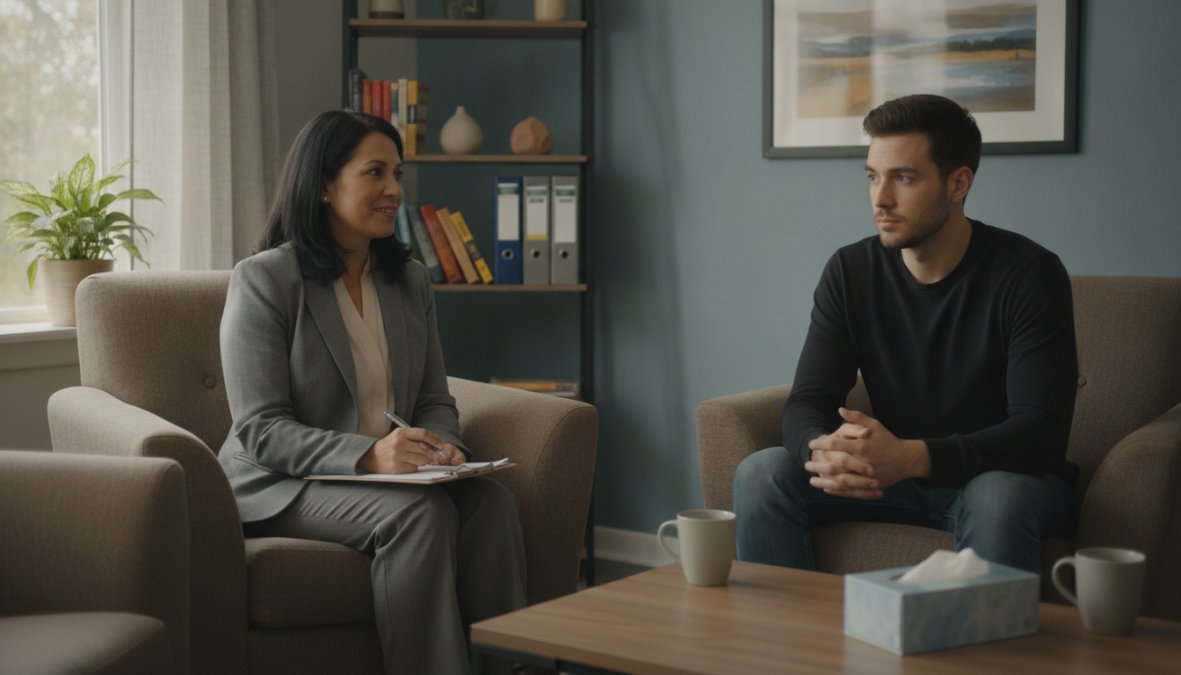
The clinical interview explores your substance use history in detail, including when you first used, patterns over time, consequences experienced, and previous treatment attempts. The counselor also assesses mental health factors, family history, social support, and readiness to change. You’ll complete standardized screening tools that quantify your substance use severity using objective clinical indicators.
The Clinical Interview Process
During the clinical interview, the counselor asks open-ended questions about your substance use history. Be honest, the counselor isn’t there to judge you or increase your sentence, but to document your actual situation. Minimizing use typically backfires because counselors recognize inconsistencies.
The counselor also explores protective factors like family support, employment stability, housing security, and personal motivation. A thorough evaluation balances risk factors with protective factors, providing a realistic picture of your situation.
Standardized Assessments and ASAM Criteria
Most evaluations use ASAM (American Society of Addiction Medicine) criteria as the clinical framework, assessing six dimensions: acute intoxication and withdrawal potential, biomedical conditions, emotional and behavioral conditions, readiness to change, relapse and recovery environment, and recovery environment. The counselor scores each dimension to determine your appropriate level of care.
Common standardized instruments include the DAST-10 (Drug Abuse Screening Test), AUDIT (Alcohol Use Disorders Identification Test), and SASSI (Substance Abuse Subtle Screening Inventory). Your responses generate scores indicating severity level: minimal, mild, moderate, or substantial.
How Long Is Court-Ordered Rehab or Counseling?
The duration of court-ordered treatment depends entirely on your evaluation results and the judge’s sentencing. Someone ordered to complete 12 weeks of outpatient counseling will attend one session weekly for three months. Someone ordered to residential treatment might spend 28-90 days in an inpatient facility. The evaluation report typically recommends a duration, but the judge makes the final determination.
Probation-ordered treatment is mandatory. Failure to complete required hours or attend scheduled sessions can result in probation violation, additional jail time, or extended probation. Many probation officers work with treatment providers to ensure progress and may adjust probation conditions if treatment is going well.
If you struggle to complete court-ordered treatment due to work, childcare, or transportation barriers, discuss alternatives with your probation officer immediately. Many jurisdictions allow flexible scheduling or virtual sessions.
Counselor Progress Reports for Probation
Your treatment provider submits progress reports to your probation officer at regular intervals, typically monthly or quarterly. These reports document your attendance, engagement level, progress toward treatment goals, and any concerning behaviors or relapse incidents.
What Probation Officers Receive
Probation officers receive detailed progress reports including attendance records, clinical observations, and recommendations for continued care. The report documents whether you attended scheduled sessions, participated actively, and demonstrated commitment to recovery. It also flags any missed appointments, substance use relapse, or non-compliance.
These reports directly influence probation decisions. Officers use them to determine whether probation conditions should be relaxed, maintained, or tightened. Your counselor’s observations carry significant weight in the probation officer’s decision-making.
Confidentiality and Legal Documentation
While your treatment sessions are confidential, the probation-ordered context creates exceptions. Your counselor can share information with your probation officer and the court regarding attendance, engagement, and clinical progress, but not specific details of what you discussed in therapy.
All evaluation reports and progress notes become part of your legal record. If you relapse or engage in other illegal activity, your counselor is typically required to report it to your probation officer. Being transparent about struggles often leads to adjusted treatment rather than immediate violation charges.
Factors That Influence Evaluation Costs
The cost of a substance abuse evaluation varies based on geography, counselor credentials, facility overhead, and insurance coverage. Most evaluations range from $150 to $500 without insurance. Facility-based assessments tend toward the higher end, while private practice and telehealth providers typically charge less.
Insurance Coverage and Out-of-Pocket Options
If you have health insurance, your plan may cover substance abuse evaluations, especially if ordered by a court. Contact your insurance company with your probation order or court documentation. Many insurers cover evaluations classified as mental health services.
For those without insurance, community health centers often offer sliding-scale fees based on income. Some treatment facilities offer payment plans that spread costs over several months. Non-profit organizations sometimes provide free or reduced-cost evaluations to low-income individuals.
Preparation Checklist for Your Substance Abuse Counselor Appointment
Preparing for your evaluation reduces anxiety and ensures you present accurate information.
Documents to Bring
Bring a photo ID and any court documentation related to your probation order. If you have previous treatment records or mental health diagnoses, bring those as well. Bring medication bottles or a list of medication names and dosages. Also bring a list of emergency contacts and people you trust.
Common Mistakes to Avoid
The biggest mistake is minimizing your substance use or lying about your history. Counselors recognize inconsistencies, and dishonesty typically results in a more restrictive treatment recommendation. Don’t arrive late or unprepared, the evaluation takes 45-90 minutes. Avoid bringing distractions like phones or companions into the evaluation room. Don’t expect the counselor to make decisions about your case; judges and probation officers make final determinations.
Finding the right substance abuse counselor for probation is one of the most important steps in your probation process. The evaluation sets the foundation for your treatment plan and influences your probation officer’s ongoing decisions about your case.
Frequently Asked Questions
Does probation require substance abuse counseling?
Many probation sentences include mandatory substance abuse evaluation and counseling as a condition. A court or probation officer may require a formal assessment to determine the appropriate level of treatment. The substance abuse counselor will complete a diagnostic evaluation and provide treatment recommendations based on ASAM criteria. Your probation terms will specify whether counseling is required and for how long.
How do I find a court-approved substance abuse counselor?
Start by contacting your probation officer, who can provide a list of approved providers in your area. You can also search state-licensed counselor databases or contact your local court system. Look for counselors holding IC&RC or affiliated board credentials. DrugEval.com streamlines this process, you can book an appointment in 60 seconds at https://drugeval.com/find-my-evaluation/ to connect with qualified counselors who deliver court-ready evaluation reports.
What happens if I miss a substance abuse counseling session while on probation?
Missing sessions without valid reason can result in probation violations. Your counselor reports attendance and progress to your probation officer. If you miss appointments, contact your counselor and probation officer immediately to explain. Consistent non-compliance may lead to sanctions, increased supervision, or violation proceedings. Always communicate schedule conflicts in advance and maintain regular attendance to stay compliant with probation requirements.
How does a substance abuse counselor report to a probation officer?
Counselors submit progress reports documenting your attendance, participation, clinical assessments, and treatment recommendations. These reports are confidential but shared with your probation officer as required by law. The report includes information about your substance use disorder status, compliance with recommendations, and any concerns. You typically receive a copy of the evaluation report, which serves as legal documentation for the court.
Ready to book your evaluation?
It’s confidential and takes about 60 seconds to get matched to the right evaluation and a qualified substance abuse professional.
Find My Evaluation

