

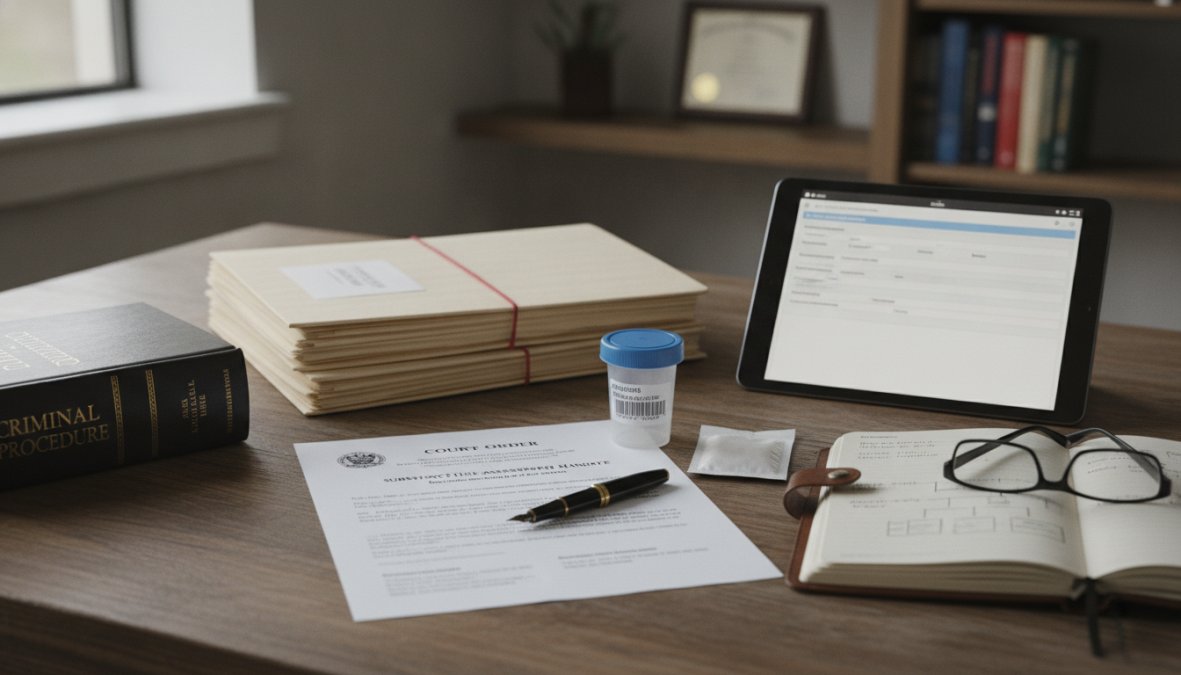
Court Ordered Drug Assessment: What You Need to Know
Facing a court ordered drug assessment? Learn what to expect, how to prepare, and how to get a fast, compliant evaluation online. Start today.
Last Updated: June 17, 2026
A court ordered drug assessment is one of the most misunderstood steps in the legal process, yet it carries significant weight in determining outcomes across criminal, civil, and family court cases. This guide from DrugEval.com covers what the evaluation involves, how to prepare, what evaluators are looking for, and what happens after you receive results, including two angles most guides skip: how to appeal an unfavorable result and how to access financial assistance.
Most people walk into a substance abuse evaluation without knowing what questions will be asked, how long it takes, or what the report means for their case. This guide is designed to eliminate that uncertainty.
What Is a Court Ordered Drug Assessment?
A court ordered drug assessment is a formal clinical evaluation, mandated by a judge or legal authority, that determines the nature and severity of an individual’s substance use and recommends appropriate next steps. It is not a punishment, it is a diagnostic tool used by the court to make informed decisions about sentencing, probation requirements, custody arrangements, or diversion program eligibility.
The evaluation is conducted by a licensed professional, often a certified substance abuse counselor or clinical social worker, using standardized screening tools and a structured clinical interview. The result is a written report submitted to the court outlining findings and recommendations. The assessment is not designed to catch you; it is designed to categorize risk and match individuals to appropriate levels of care.
Assessment vs. Drug Test: Understanding the Difference
A drug test and a substance abuse evaluation are not the same thing.
Drug screening is a biological test, typically urine analysis or hair follicle, that detects the presence of specific substances at a given point in time. It answers: “Is this substance present right now?”
A court ordered drug assessment is a comprehensive clinical process examining patterns of use, behavioral history, psychological factors, and co-occurring disorders. It answers: “Does this person have a substance use disorder, and if so, how severe is it?”
The drug screen is often one component of the larger assessment, not a substitute for it.
Assessment vs. Treatment: Where One Ends and the Other Begins
The assessment determines whether treatment is needed and at what level. Think of it this way: the assessment is the diagnosis, and the addiction treatment program is the prescription. Completing an evaluation does not mean you are enrolled in treatment, it means a licensed professional has reviewed your history and made a clinical recommendation. The court then decides whether to mandate treatment based on that recommendation.
If your evaluation recommends a specific level of care, ask your attorney to review the ASAM criteria used to justify that recommendation. Understanding the clinical reasoning gives you more informed options.
Common Legal Situations That Require a Court Ordered Drug Assessment
Courts order substance abuse evaluations across a broader range of legal proceedings than most people realize, not only for obvious drug-related charges.
DUI/DWI Charges
DUI and DWI cases are the most common trigger for a court-mandated drug evaluation. Many states require one as a condition of sentencing, even for a first offense. The evaluation helps the court determine whether the incident was an isolated lapse or part of a pattern consistent with chemical dependency, directly influencing fines, license suspension length, and whether treatment or an educational course is mandated.
According to the National Highway Traffic Safety Administration’s guidance on impaired driving, courts increasingly rely on clinical assessments to differentiate between situational and chronic impairment, shaping the entire sentencing procedure.
Child Custody Cases and Family Court
Family courts order substance abuse evaluations when there is credible concern that a parent’s substance misuse poses a risk to a child’s safety. These evaluations carry enormous weight, an unfavorable result can affect visitation rights, custody arrangements, and reunification timelines. The court is not just deciding a sentence; it is deciding where a child lives, and the report is scrutinized carefully by both attorneys and the judge.
Probation Requirements and Diversion Programs
Probation officers frequently require a court ordered drug assessment as a condition of supervision. Diversion programs, which allow eligible defendants to avoid a criminal record by completing treatment or education, almost universally require an evaluation at intake. Failure to complete it can result in probation violations or loss of diversion eligibility.
Missing your scheduled evaluation appointment, even once, can be treated as non-compliance with your probation requirements. Courts view this seriously, and it can trigger a violation hearing.
What to Expect at a Court Ordered Drug Evaluation
The court ordered drug evaluation follows a structured clinical framework. It is not a casual conversation, but it is also not an interrogation. Knowing the format in advance removes most of the anxiety.

The Clinical Interview and Psychosocial Assessment
The clinical interview is the core of the evaluation. A licensed evaluator will ask structured questions about your substance use history, frequency of use, family history of addiction, mental health history, employment, legal history, and social relationships, a psychosocial assessment that provides a complete picture of your life context. Evaluators use validated instruments such as the AUDIT or DAST-10 to quantify risk and may apply DSM-5 diagnostic criteria to determine whether a substance use disorder is present and at what severity.
Be honest. Evaluators are trained to identify inconsistencies, and minimizing use history typically produces a less accurate report that may not serve your legal interests.
Drug Screening: Urine Analysis and Hair Follicle Tests
Most evaluations include a biological drug screening component. Urine analysis is most common, detecting use within the past few days to a week. A hair follicle test provides a longer window, up to 90 days. Both are handled according to strict chain-of-custody protocols to ensure results are defensible in court.
The Evaluation Report and Counseling Recommendations
After the interview and screening, the evaluator compiles a written report summarizing findings, assigning a risk profile, and outlining counseling recommendations, ranging from no treatment to residential rehabilitation. The report goes to the court, not the general public. Confidentiality rules governing this document are addressed in the preparation section below.
Drug Assessment Questions and Answers: What Evaluators Actually Ask
Evaluators ask questions across these predictable categories:
-
Substance use history: What substances have you used? How often? Have you ever used intravenously?
-
Consequences of use: Legal, employment, relationship, or health problems related to substance use?
-
Control and dependence: Have you tried to cut back? Have you experienced withdrawal?
-
Mental health and co-occurring disorders: Diagnoses or treatment for depression, anxiety, PTSD, or other conditions?
-
Family and social history: Family history of addiction? Current support system?
-
Motivation and insight: Do you believe your substance use is a problem? Are you open to treatment?
The last category is the one most people underestimate. Evaluators assess not just what you’ve done, but how you understand your own behavior. Defensiveness or minimization is noted in the report.
How Long Does a Drug Assessment Take?
A court ordered drug evaluation typically takes one to three hours, depending on the complexity of the individual’s history and court requirements. The clinical interview runs 45 to 90 minutes; drug screening adds 15 to 30 minutes. Some evaluators complete both in a single appointment; others split them across two sessions.
Online evaluations through telehealth platforms can be completed in a single session without travel time. At DrugEval.com, appointments can be booked in 60 seconds and conducted via secure telehealth with licensed, credentialed counselors. The written report is typically delivered within a few business days, with expedited turnaround available for tight court deadlines. To get started with an evaluation with us, visit our Find My Evaluation page.
How to Prepare for Your Evaluation: A Step-by-Step Checklist
Preparation is the single biggest factor in a productive evaluation. Most people show up without it and give vague, inconsistent answers that complicate the report.
Use this checklist before your appointment:
-
Gather your legal paperwork. Bring the court order, referral letter, or probation officer’s instructions.
-
Write down your substance use history. Include substances used, approximate frequency, and last use date for each.
-
List any prior treatment or counseling. Dates, providers, and whether you completed the program. Bring documentation if available.
-
Document any mental health history. Diagnoses, medications, and prior hospitalizations are relevant to the psychosocial assessment.
-
Know your legal timeline. Share the court’s report deadline with the evaluator so turnaround can be planned.
-
Avoid substances before your appointment. Showing up with a positive screen while claiming sobriety creates an immediate credibility problem.
-
Prepare to answer honestly about consequences. Lost jobs, relationship breakdowns, prior DUIs, and health issues are all part of the picture.
-
Confirm confidentiality rules with your evaluator. Understand exactly who will receive the report before the session begins.

The most effective thing you can do before a substance abuse evaluation is write down your history honestly and completely before the appointment. Evaluators consistently note that prepared clients produce more accurate, defensible reports.
What Happens After the Assessment: Legal Advocacy and Next Steps
The evaluation report is not the end of the process. If it recommends treatment, your attorney can review the clinical reasoning and, in some cases, negotiate the level of care. A recommendation for residential rehabilitation is not automatically what the court will order. Attorneys familiar with substance use law often work with evaluators to clarify whether a less restrictive option, such as outpatient counseling, adequately addresses the identified risk.
According to SAMHSA’s treatment locator and legal guidance resources, matching treatment intensity to clinical need rather than defaulting to the most restrictive option produces better long-term outcomes, an argument courts are increasingly receptive to when backed by a credible assessment.
Appealing an Unfavorable Assessment Result
An unfavorable evaluation result is not necessarily final. If you believe the evaluation was conducted improperly, that relevant information was not considered, or that DSM-5 criteria were misapplied, you can request a second independent evaluation from a different provider. Courts may not always accept a second opinion.
Your attorney should request the full evaluation report, not just the summary, the clinical reasoning section often reveals whether ASAM criteria were correctly applied. If you have evidence of sobriety, completed treatment, or mental health care that was not adequately considered, gather it before the next court date.
State-Specific Requirements and Financial Assistance Options
Each state sets its own standards for evaluator licensure, approved providers, and acceptable evaluation formats. Some require evaluations only by state-certified providers; others accept any licensed counselor with relevant credentials. Confirm that your provider meets your jurisdiction’s requirements before scheduling.
As the Substance Abuse and Mental Health Services Administration’s state program directory documents, requirements vary significantly across DUI, diversion, and family court mandates.
Financial assistance is available for those who cannot afford the cost. Options include:
-
Sliding-scale fee programs offered by community mental health centers
-
State-funded indigent defense programs that may cover evaluation costs for qualifying defendants
-
Diversion program funding in some jurisdictions, where the court absorbs evaluation costs
-
Nonprofit organizations that provide substance abuse evaluation vouchers for low-income individuals
Check with your public defender or legal aid organization before assuming you cannot afford the evaluation. The Legal Services Corporation’s resource directory for low-income legal assistance is a useful starting point for finding local programs.
Meeting a court-ordered requirement for a substance abuse evaluation is stressful, but the process does not have to be complicated. DrugEval.com provides a 100% online evaluation platform connecting you with licensed counselors holding IC&RC or affiliated board credentials, with an average of five or more years of experience. The entire process, from booking to receiving your court-ready report, is handled through secure telehealth sessions and encrypted intake forms, with no in-person appointments required. Start now at DrugEval.com and get a compliant, professional evaluation report on your timeline.
Frequently Asked Questions
What happens during a court ordered drug assessment?
During a court ordered drug assessment, a licensed evaluator conducts a clinical interview to review your substance use history, mental health background, and current legal situation. This psychosocial assessment may also include standardized screening tools aligned with DSM-5 criteria and ASAM criteria. Depending on the case, drug screening such as a urine analysis or hair follicle test may be required. The evaluator then compiles an evaluation report with counseling recommendations submitted to the court.
How long does a court ordered drug assessment take?
Most court ordered drug assessments take between 60 and 90 minutes for the clinical interview portion. However, the total time from scheduling to receiving your completed evaluation report can vary. Online platforms like DrugEval.com allow you to book an appointment in 60 seconds and typically offer faster turnaround times than traditional in-person providers, helping you meet court deadlines without unnecessary delays.
Can I fail a court ordered drug assessment?
A court ordered drug assessment is not a pass/fail test in the traditional sense. The evaluator’s goal is to provide an unbiased clinical perspective on your risk profile and any substance misuse patterns. Results may range from no treatment needed to a recommendation for an outpatient or inpatient addiction treatment program. Being honest during the evaluation is important — evaluators are trained to identify inconsistencies, and transparency generally leads to more appropriate, proportionate recommendations.
What should I bring to a court ordered drug evaluation?
Bring a valid government-issued ID, any court documents or referral paperwork specifying the evaluation requirements, a list of current medications, and your insurance information if applicable. If your evaluation is online, ensure you have a stable internet connection and a private, quiet space. Reviewing your personal substance use history beforehand so you can answer the drug assessment questions accurately and honestly will also help the process go smoothly.
How much does a court ordered drug assessment cost?
The cost of a court ordered drug assessment varies depending on the provider, your location, and the type of evaluation required. Online evaluations through platforms like DrugEval.com are often more affordable than traditional in-person clinics. For specific pricing, visit the DrugEval.com pricing page. If cost is a concern, some states offer financial assistance or indigent defense resources — check with your attorney or local court for available options.
What is the difference between a drug assessment and a drug test?
A drug test — such as a urine analysis or hair follicle test — detects the presence of specific substances in your system at a given time. A drug assessment is a comprehensive clinical evaluation that examines patterns of substance use, behavioral history, co-occurring disorders, and legal context. While a drug screening may be one component of an assessment, the full court ordered drug assessment produces an evaluation report with treatment or counseling recommendations intended to guide legal proceedings and sentencing procedures.
Ready to book your evaluation?
It’s confidential and takes about 60 seconds to get matched to the right evaluation and a qualified substance abuse professional.
Find My Evaluation

