Illinois Out-of-State Evaluation Guide (How to Complete an SOS Evaluation if You No Longer Live in IL)
If you’ve moved out of Illinois but need to complete a Secretary of State (SOS) substance use evaluation for driving privileges, here’s what you need to know:
- Why It’s Required: Illinois mandates these evaluations for DUI reinstatement and other driving violations to assess risk and determine eligibility for driving privileges.
- Telehealth Solution: Remote evaluations via video call are now accepted, provided they’re conducted by Illinois-licensed professionals using secure, HIPAA-compliant platforms.
- Preparation: Gather your driving record, treatment history, proof of residency, and other required documents. Ensure your tech setup is ready for the session.
- Process: Schedule with a certified Illinois counselor, complete pre-evaluation forms, attend the video session, and submit your evaluation within six months of completion.
Telehealth simplifies the process, saving you time and travel. Just ensure all paperwork is accurate and submitted on time to avoid delays.
Eligibility and Legal Requirements for Remote Evaluations
To ensure your remote evaluation meets Illinois standards, it’s important to understand the licensing and legal requirements involved. Below are the key details you need to know.
Illinois Telehealth Licensing Requirements
In Illinois, telehealth services for substance use evaluations are allowed, but only if conducted by a licensed professional. This means your counselor must have an active Illinois license, such as a Licensed Clinical Professional Counselor (LCPC), Licensed Clinical Social Worker (LCSW), or Certified Addiction Counselor (CAC), issued by the state’s regulatory authority.
Additionally, the telehealth platform used for your evaluation must comply with HIPAA regulations to protect your privacy and medical records. At the start of your session, the counselor will typically confirm your identity and note your current location to ensure the evaluation process remains secure and credible.
Requirements for Out-of-State Residents
If you live outside Illinois, you can still complete a remote evaluation. However, it’s essential to confirm that a telehealth evaluation is acceptable in your specific case. Court orders or legal agreements may require in-person assessments, so it’s a good idea to check with your attorney, probation officer, or the court handling your case to ensure telehealth is permitted.
While Illinois requires the counselor to be licensed in the state, most other states allow their residents to use telehealth services from out-of-state providers. Even so, it’s smart to double-check your local regulations. Keep in mind that processing times and the acceptance of evaluation results can vary depending on your legal situation, so plan ahead if you’re working with deadlines.
Make sure you have a stable internet connection, a private setting for your session, and digital copies of any required documents ready to go.
Preparing for Your Telehealth Evaluation
Having the right documents and a reliable tech setup is key to meeting Illinois SOS requirements for your evaluation.
Required Documents Checklist
Make sure you gather all necessary documents beforehand.
Your driving history is the cornerstone of your application. You’ll need a complete driving record from the Illinois SOS, showing all violations, suspensions, and reinstatement attempts. If you’ve been denied in the past, it’s critical to get your Denial Order and any previously submitted documents from the Illinois Secretary of State Archive Department. These can help pinpoint past issues and guide your next steps.
Another must-have is your treatment records. Collect documentation from any substance use treatment programs you’ve participated in, whether it was inpatient rehab, outpatient counseling, or support groups. These records should include treatment dates, completion certificates, and progress notes from your providers.
If you’re applying from out of state, you’ll need proof of residency. Acceptable documents include utility bills, lease agreements, mortgage statements, or voter registration cards dated within the last 90 days. Be sure the address matches the one on your application.
Character letters can add strength to your case. Ask for letters from employers, community leaders, family members, or sponsors that vouch for your sobriety and integrity. Including letters from a variety of sources gives a fuller picture of your character.
For commercial drivers, DOT or FMCSA compliance documentation is required. This should show that you’ve met federal standards for substance abuse professionals and the return-to-duty process.
Once you’ve gathered everything, organize your documents so they’re easy to access during your session.
Organizing Your Records
Before your telehealth session, create digital copies of all your documents and organize them into clearly labeled folders on your computer. For example, you might name folders “Driving History”, “Treatment Records”, “Residency Proof”, and “Character Letters.”
Arrange treatment records in chronological order, listing each episode by date and including details like the provider’s name, type of treatment, duration, and outcome. This timeline helps your evaluator get a clear picture of your recovery progress.
Double-check all dates and details on your documents. The Illinois SOS is very strict about accuracy, and inconsistencies could lead to denial. If you spot any errors or gaps, gather additional records to clarify the timeline before your evaluation.
Keep both digital and physical copies on hand. While you’ll mostly share documents electronically, having hard copies nearby can be helpful if your evaluator needs to see original signatures or official seals.
Once your documents are ready, focus on preparing your tech setup for a smooth session.
Setting Up for Your Video Session
Test your equipment at least 24 hours before your evaluation. Make sure your computer or smartphone has a working camera and microphone, and download any required video conferencing software ahead of time. Many sessions use platforms like Zoom, but confirm the exact platform with your provider.
A stable internet connection is essential. If your home internet isn’t reliable, consider using a location with better connectivity, such as a library, office, or a friend’s home.
Choose a quiet, private space for your session. Confidentiality is a priority, so minimize background noise and interruptions. Use a room with a door you can close, and let others in your household know you’ll be unavailable during the session.
Lighting and camera placement also matter. Position yourself in a well-lit area, such as facing a window or lamp, and set your camera at eye level. This ensures your evaluator can clearly see your facial expressions and body language.
Finally, log in 5–10 minutes early after silencing any devices. This buffer time allows you to troubleshoot any last-minute issues and shows professionalism, ensuring the evaluation starts on time.
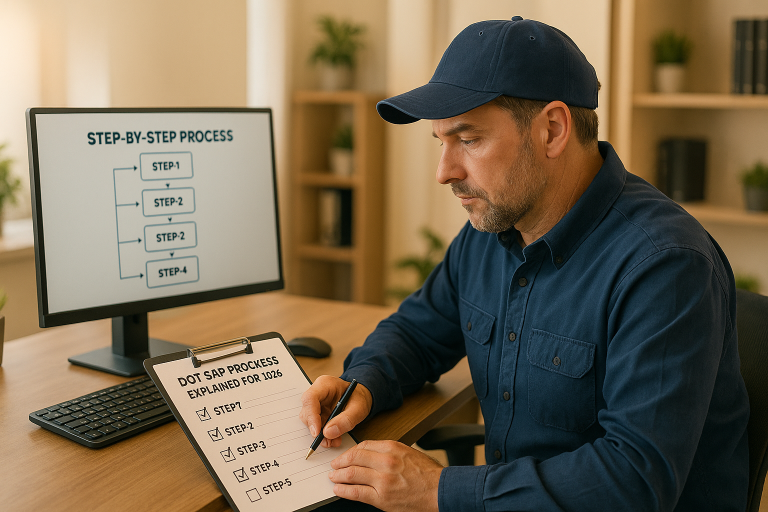
Step-by-Step Process for Completing an SOS Evaluation Remotely
Once your documents and tech setup are ready, it’s time to move forward with the remote SOS evaluation. Here’s how the process unfolds, from scheduling your appointment to reviewing your evaluation report.
Scheduling Your Appointment
Start by reaching out to a certified Illinois telehealth provider. You can contact them via phone, email, or an online form. Many providers specialize in remote SOS evaluations and are familiar with the requirements for driver’s license reinstatement cases in Illinois.
Pay attention to their business hours, especially if you’re in a different time zone. Some providers even offer a free case review, giving you a chance to discuss your situation, review the necessary paperwork, and understand the timeline for completing the evaluation.
When scheduling, be ready to share some basic details about your case, such as your location, the reason for the evaluation, and any previous denials. The provider will explain their process, confirm their Illinois licensing, and go over pricing and payment options.
Appointments are often available within a few days to a week. If you’re on a tight deadline, ask about expedited services, which can help if you need results quickly for court or other time-sensitive matters. Once your appointment is confirmed, complete any required pre-evaluation forms to ensure a smooth session.
Completing Pre-Evaluation Forms
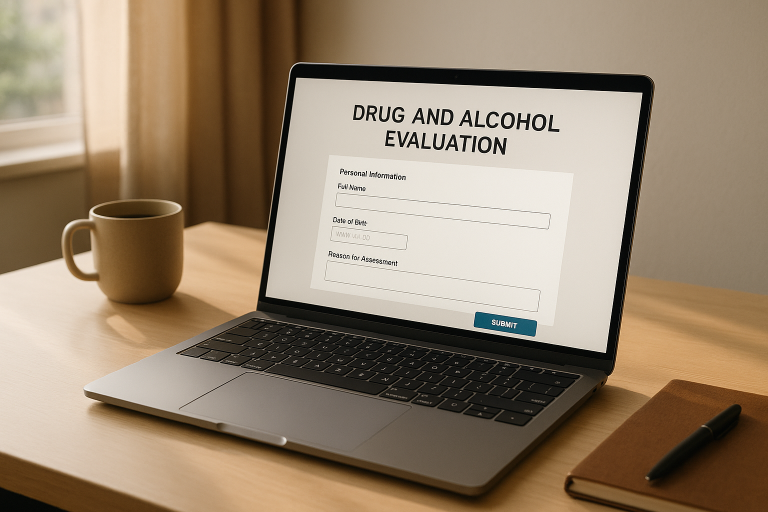
Before your evaluation, you’ll receive pre-evaluation forms, which are critical to the process. One key document is the four-page Illinois Out-of-State Packet. Fill it out carefully – errors can lead to application denial.
The forms will ask about your substance use history, participation in treatment, lifestyle, and the events surrounding your DUI charge. Be honest and thorough in your answers to avoid discrepancies between your written responses and the verbal interview.
If you’re unsure about any part of the form, don’t hesitate to contact the evaluator’s office for clarification. Once your forms are submitted, you’ll move on to the actual evaluation session.
What to Expect During the Evaluation Session
Your telehealth evaluation will take place via video call and follows Illinois SOS guidelines for a fair and personalized assessment.
The evaluator will start by verifying your identity and reviewing your pre-evaluation forms. They’ll then conduct an interview to discuss your substance use history, treatment experiences, and recovery progress.
You may also be asked to complete standardized questionnaires designed to assess your risk level. These tools typically cover topics like drinking habits, attitudes toward substance use, and coping mechanisms. Answer honestly, as these assessments are designed to identify inconsistencies.
Additionally, the evaluator will discuss the circumstances of your DUI charge, any prior violations, and steps you’ve taken toward recovery. They might also ask about your support system, employment status, and plans for maintaining sobriety.
Throughout the session, maintain eye contact with the camera, speak clearly, and provide detailed answers to ensure a smooth process.
Receiving and Understanding Your Evaluation Report
Within 24 to 48 hours after your session, you’ll receive a detailed evaluation report, typically 9 to 10 pages long. This report will summarize your substance use history, treatment participation, risk assessment, and recommendations for the Illinois SOS.
The evaluator will assign a risk classification, which determines the steps you’ll need to take for license reinstatement. Review the report carefully to ensure all personal details and findings are accurate. If you spot any errors, contact your evaluator immediately to request corrections.
The report may include recommendations for further treatment, monitoring, or educational programs. It’s important to understand these recommendations, as the Illinois SOS expects you to follow through with them.
Keep both digital and physical copies of your report. You’ll need to submit the original to the Illinois SOS and may also need backups during the reinstatement process.
Ready to book your evaluation?
It’s confidential and takes about 60 seconds to get matched to the right evaluation and a qualified substance abuse professional.
Find My EvaluationCompliance and Next Steps After Your Evaluation
Once you’ve received your evaluation report, here’s what you need to do to move forward with SOS reinstatement.
Understanding Risk Classifications and Recommendations
Your evaluation report may come with specific recommendations to demonstrate your sobriety and readiness to drive safely. If required, complete any treatment or education programs outlined in the report. Make sure to keep all certificates, attendance records, and progress reports as proof of completion. In some cases, the evaluation may also recommend installing a Breath Alcohol Ignition Interlock Device (BAIID) in your vehicle. This device requires periodic breath tests before and during driving.
Once you’ve wrapped up the necessary steps, gather your documents and prepare to submit your packet.
Submitting Your Results to the Illinois SOS
After completing any additional requirements, organize your documents carefully. Your submission should include the complete Out-of-State Packet, your evaluation (dated within the last six months), and all other required paperwork. Don’t forget the applicable fees: $500 for revocation cases, plus an extra $50 if a formal hearing is needed. For quicker processing, submit your packet electronically through email or an online portal.
After submission, keep an eye on your communication channels for any follow-up requests or additional documentation. It’s also a good idea to track the expiration date of your evaluation to avoid complications.
Renewal and Expiration of Evaluations
Substance use evaluations are valid for 180 days from the date they’re completed. This means you must submit your Out-of-State Packet within six months of receiving your evaluation. Once your packet is received, the SOS has up to 180 days to review and make a decision, though most decisions arrive by mail in about 90 days.
If your evaluation expires before you’ve submitted your packet, you’ll need to start over. This involves scheduling a new evaluation, filling out pre-evaluation forms again, attending another video session, and paying for a new evaluation report. To avoid setbacks, aim to submit your packet as soon as possible. If the SOS requests additional documents during their review, respond quickly to avoid further delays.
Keep track of all deadlines to ensure a smooth process.
Conclusion
Completing an Illinois SOS substance use evaluation remotely requires careful preparation and following specific steps. The process involves gathering the necessary documents, scheduling an appointment with an Illinois-licensed evaluator, participating in a detailed video session, and ensuring the evaluation results are submitted within the 180-day validity window.
Preparation is crucial. Missing documents can delay the process, potentially pushing back your license reinstatement by weeks or even months. Make sure to have your driving records, prior treatment certificates, valid identification, and a full substance use history ready before your appointment. Being organized can save you time and frustration.
Telehealth has made it easier for out-of-state residents to complete this evaluation. However, it’s essential to work with a provider who produces reports that meet Illinois’s specific standards and include all required components.
Timing is everything. The evaluation must be submitted within six months of completion to remain valid. If it expires, you’ll need to start over, which includes rescheduling and paying additional fees.
Once your evaluation is complete, the next step is submission. Services like DrugEval.com simplify this process for out-of-state residents. They use licensed Illinois evaluators familiar with SOS requirements, provide secure document uploads through the eDSRS system, and guide you through the submission process. Evaluations start at $199, with expedited 24-hour options available for $249, making a potentially complicated procedure more manageable.
FAQs
What should I do if there are mistakes or issues in my evaluation report?
If you spot any errors or inaccuracies in your evaluation report, it’s crucial to take action quickly. Reach out to the professional or agency that prepared the report and clearly explain the corrections needed. Make sure to have any supporting documentation or evidence ready to back up your request.
After the corrections are made, request an updated version of the report. Double-check that all the details are correct and align with the Illinois Secretary of State’s requirements before you submit it. Staying organized and maintaining clear communication can help ensure the process goes as smoothly as possible.
How can I make sure my telehealth evaluation meets Illinois state and federal requirements for commercial drivers?
To meet Illinois state and federal requirements for a telehealth evaluation, it’s crucial to work with a licensed provider who understands the specific legal standards in Illinois. The evaluation must align with the Illinois Secretary of State (SOS) guidelines and federal regulations, including those established by the Department of Transportation (DOT).
Be sure to gather and submit all necessary documentation, such as your driving record and any notices from the SOS. During the evaluation, answer questions honestly and thoroughly to ensure the process is accurate and compliant. If you’re unsure about any part of the evaluation, your provider can help clarify the steps and guide you through completing it remotely.
What happens if my Illinois SOS evaluation expires before I submit my Out-of-State Packet?
If your Illinois Secretary of State (SOS) substance use evaluation expires before you send in your Out-of-State Packet, you might have to get a new evaluation. These evaluations usually come with a set validity period, and submitting one that’s expired can slow down the process or even lead to your packet being rejected. To prevent any issues, double-check that your evaluation is up-to-date before submitting your paperwork. If you’re uncertain about the expiration date or need guidance, reach out to either your evaluator or the Illinois SOS for confirmation.
Ready to book your evaluation?
It’s confidential and takes about 60 seconds to get matched to the right evaluation and a qualified substance abuse professional.
Find My Evaluation