
Failed a DOT Drug or Alcohol Test? What CDL Drivers Must Do in 2026
If you fail a DOT drug or alcohol test, your CDL career isn’t over – but you’ll need to follow strict federal rules to get back on the road. The process includes:
- Immediate Suspension: You’re removed from safety-sensitive duties and marked “prohibited” in the FMCSA Clearinghouse.
- SAP Evaluation: Work with a DOT-qualified Substance Abuse Professional (SAP) to assess and address the violation.
- Treatment Plan: Complete the education or treatment required by the SAP.
- Return-to-Duty Test: Pass a directly observed drug test to regain eligibility.
- Follow-Up Testing: Be prepared for unannounced tests for up to 5 years.
Starting November 18, 2024, a failed test will also trigger CDL suspension or revocation in most states. Telehealth options, like DrugEval.com, can simplify the SAP process, offering faster evaluations and reduced costs. Taking immediate action ensures compliance and protects your driving future.
What Counts as Failing a DOT Test in 2026
For CDL drivers, understanding what qualifies as a DOT violation is crucial. Knowing these standards can help you avoid mistakes that might jeopardize your career. Let’s break down the key violations and their immediate consequences.
Types of DOT Violations
DOT violations happen under specific conditions. For instance, testing positive for any of the five-panel drugs – Marijuana (THC), Phencyclidine (PCP), Amphetamines (including substances like methamphetamine, MDMA, and MDA), Opiates (such as heroin, codeine, morphine, hydrocodone, and oxycodone), or Cocaine – constitutes a violation. This applies whether the test uses urine or oral fluid samples.
Another violation is having a breath alcohol concentration of 0.04 or higher. Refusing to take a test also counts as a violation. This includes not providing a specimen, leaving the testing site before completing the process, or tampering with the sample. Additionally, adulterated or substituted specimens and employer-reported incidents of drug or alcohol use while on duty are considered violations.
Understanding these violations is only part of the picture. Next, let’s explore what happens immediately after a failed test.
What Happens Immediately After a Failed Test
Failing or refusing a test has immediate consequences. First, you are removed from any safety-sensitive duties. Afterward, you must undergo an evaluation with a DOT-qualified Substance Abuse Professional (SAP), while your employer reports the incident to the FMCSA Clearinghouse.
Employers are required to provide a list of DOT-qualified SAPs to help you start the recovery process. Some companies may offer “Second Chance Programs” after you meet the return-to-duty requirements. However, others enforce strict zero-tolerance policies, which could lead to immediate termination.
How a Failed Test Affects Your CDL
A Clearinghouse violation directly impacts your ability to drive commercially. The violation stays on record for five years or until you complete the return-to-duty process, whichever comes first. Until then, you are barred from safety-sensitive roles, and the incident can have long-term effects on your employment history.
Additionally, a failed test negatively affects your Pre-Employment Screening Program (PSP) report and CSA score, making it more challenging to secure future driving jobs – even after resolving your Clearinghouse status. Failing a second DOT drug test has even more severe consequences, making it much harder to regain eligibility.
These lasting effects highlight the importance of addressing violations promptly and following all return-to-duty requirements.
What CDL Drivers Must Do After Failing a DOT Test
Failing a DOT test doesn’t mean your driving career is over, but it does mean you’ll need to follow specific federal guidelines to regain eligibility. The Return-to-Duty (RTD) process, required under 49 CFR Part 40, is your path forward. Here’s how to navigate it.
Step 1: Stop Driving and Review Your Violation
As soon as you’re notified of a failed test, you must immediately stop performing any safety-sensitive duties. Continuing to drive after being notified can result in more violations or even termination.
Take time to review your test results and the written notice of your violation. Log into the FMCSA Clearinghouse to confirm your “prohibited” status and document key dates for your records. Avoid relying solely on verbal updates – keep everything in writing by requesting a list of DOT-qualified SAPs from your employer.
Once your violation is verified, your next step is to contact a qualified SAP.
Step 2: Find a DOT-Qualified SAP
To return to duty, you’ll need to work with a DOT-qualified Substance Abuse Professional (SAP). Without their approval, you cannot legally clear your “prohibited” status or resume driving.
A qualified SAP must meet specific licensing and certification criteria outlined in 49 CFR Part 40, Subpart O. They might be a licensed physician, psychologist, social worker, EAP professional, or addiction counselor. When choosing a SAP, confirm they’re up-to-date on DOT regulations, have clear evaluation and treatment procedures, and are experienced in working with FMCSA-regulated drivers.
Telehealth evaluations can make this process faster. For example, DrugEval.com offers secure, DOT-compliant evaluations for $539 USD, with complete documentation provided within 48 hours.
Step 3: Complete Your Initial SAP Evaluation
Your initial SAP evaluation is a critical step. This clinical assessment determines the extent of your substance use and outlines the education or treatment you’ll need before returning to work.
During the evaluation, the SAP will review your violation details, substance use history, and medical background. Be prepared to provide test results, a list of medications, and your employment timeline. Answer all questions honestly – any inaccuracies can delay your progress.
If you choose a telehealth option like DrugEval.com, your evaluation will take place via a secure, HIPAA-compliant video session. The SAP will verify your identity, conduct the assessment (often using standardized tools), and issue a written report with their recommendations. This report will also be sent securely to your employer or Designated Employer Representative (DER).
Step 4: Follow Your SAP Treatment Plan
Based on the evaluation, your SAP will recommend an education or treatment plan tailored to your needs. This could range from a short educational program (6–12 hours) to more intensive options like outpatient counseling, intensive outpatient programs, or even residential treatment. The time commitment varies, with education programs taking a few weeks and more comprehensive treatment lasting several months.
You’ll need to complete all recommended steps and secure official documentation, such as certificates or discharge summaries, as proof of compliance. Keep detailed records and stay proactive about scheduling to avoid delays.
Step 5: Complete Your Follow-Up SAP Evaluation and Return-to-Duty Test
After finishing your treatment plan, schedule your follow-up SAP evaluation. If the SAP determines you’ve made sufficient progress, they’ll provide written authorization for a DOT-compliant RTD test. This test, typically a directly observed urine 5-panel test, is essential for restoring your eligibility.
Passing the RTD test updates your FMCSA Clearinghouse status and allows your employer to reinstate you according to their policies. However, failing this test means starting the entire process over.
Step 6: Complete Required Follow-Up Testing
Even after passing the RTD test, you’ll need to complete follow-up testing as outlined by your SAP. This typically includes at least six unannounced tests in the first year, with the possibility of extending up to five years. Missing a test or failing one will reset the process.
Once you’ve met all SAP requirements and passed your RTD test, notify employers of your updated Clearinghouse status. Keep in mind, though, that employers aren’t required to rehire you, so you may need to seek new opportunities after completing the process.
Ready to book your evaluation?
It’s confidential and takes about 60 seconds to get matched to the right evaluation and a qualified substance abuse professional.
Find My EvaluationHow Telehealth Simplifies the SAP Process
Benefits of Telehealth for DOT/SAP Evaluations
Telehealth has made SAP evaluations much more convenient for CDL drivers dealing with DOT violations. Instead of spending hours traveling to meet a qualified Substance Abuse Professional (SAP) in person, you can now complete both your initial and follow-up evaluations from the comfort of your home using secure video conferencing. This method fully complies with 49 CFR Part 40, as long as the SAP is DOT-qualified and performs a thorough clinical assessment.
The practical benefits are hard to ignore. Drivers, particularly those in rural areas, can often secure appointments within 24–72 hours, avoiding the weeks-long wait times that in-person visits sometimes require. With flexible scheduling, you can book evening or weekend sessions, making it easier to balance family responsibilities or non-CDL jobs while you’re sidelined from safety-sensitive duties. Plus, skipping the need for travel means you save on fuel, lodging, and meal costs, reducing your overall expenses during this process.
Telehealth also provides a more private and comfortable setting, which can make it easier to discuss sensitive issues openly. This can lead to a more accurate assessment and a better treatment plan. Another advantage is continuity of care – your SAP can handle everything from the initial evaluation to treatment check-ins and the follow-up assessment. This consistency keeps your case moving forward and prevents unnecessary delays that could extend your time off the road.
On top of these benefits, specialized telehealth services are available to help you get back to work as quickly as DOT regulations allow.
How DrugEval.com Streamlines Your Evaluation
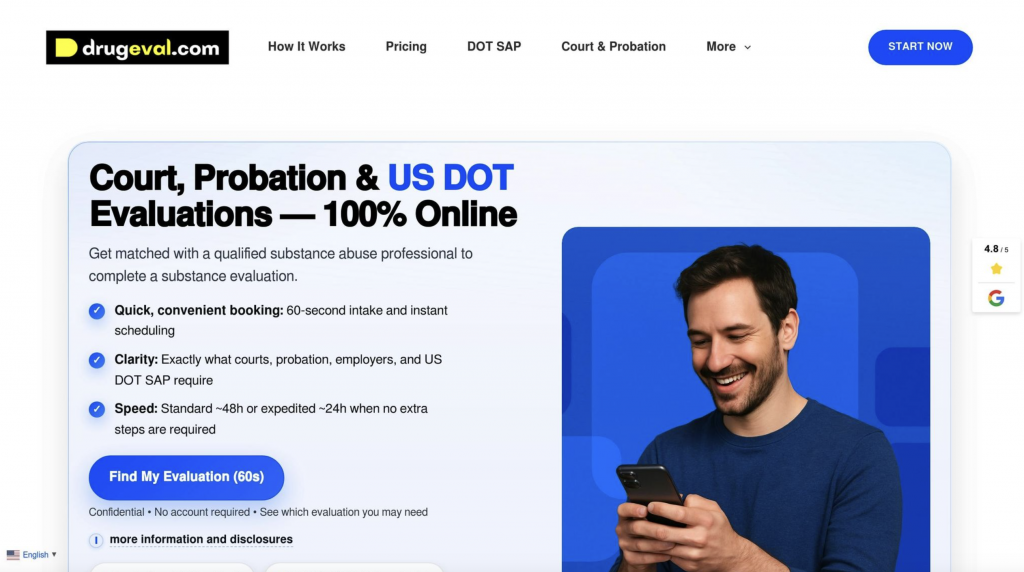
DrugEval.com takes telehealth benefits a step further by offering an efficient and user-friendly evaluation process. With 24/7 online booking and a simple 60-second intake form, you can schedule an appointment as soon as you receive your prohibited-status notice – no need to wait for regular office hours.
Once you’ve booked, you’ll fill out a secure, HIPAA-compliant intake questionnaire. This form gathers essential details like the type of violation, test date, employer information, and substance use history. By reviewing this information ahead of time, the SAP can conduct a more focused and efficient video evaluation. After the initial session, DrugEval.com provides a written report with treatment recommendations within 48 hours – or within 24 hours if you opt for expedited service at $589. The standard DOT SAP evaluation, which includes both the initial and follow-up sessions, is priced at $539.
After completing the required treatment or education, scheduling a follow-up evaluation is quick and easy. During this session, the SAP will confirm your compliance and, if progress meets the standards, issue your return-to-duty test authorization electronically. This streamlined digital process – with electronic reports and direct communication with your employer – cuts out postal delays and unnecessary back-and-forth, allowing your employer to schedule your return-to-duty test much faster.
For urgent cases, DrugEval.com often offers priority or same-week appointments, which is especially helpful for drivers trying to avoid losing a job opportunity. This efficient approach ensures you can navigate the process as quickly as DOT rules allow.
Staying Compliant and Protecting Your CDL
How Long Violations Stay in the FMCSA Clearinghouse
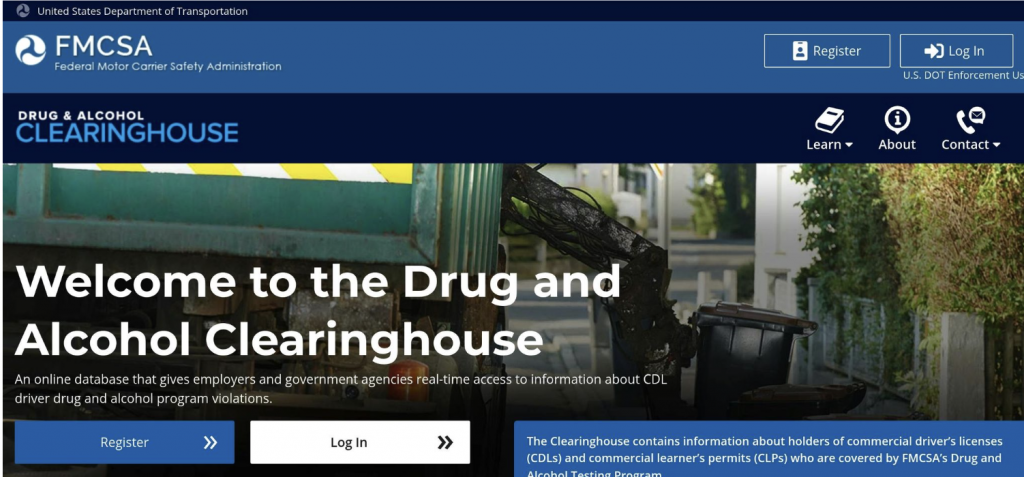
A DOT violation remains in the FMCSA Clearinghouse for five years after its resolution or determination – whichever comes later. This means the clock starts ticking only after you’ve completed the return-to-duty process, not from the date of the original violation.
Starting November 18, 2024, CDL drivers listed as “prohibited” in the Clearinghouse will face immediate CDL suspension in most states. Even after completing the return-to-duty process, your record will still reflect the violation, and future employers will see it when they query the Clearinghouse.
To keep track of your compliance status, you can register for the Clearinghouse at no cost. First, create an account on Login.gov, then sign up for Clearinghouse access to view your driver record online. The system will notify you via email or mail whenever there are updates to your record, whether information is added, revised, or removed.
Knowing how long a violation stays on your record highlights the importance of staying compliant and proactive in managing your CDL.
How to Avoid Future Violations
Keeping your CDL in good standing requires more than just completing the return-to-duty process – it’s about maintaining a clean record moving forward.
The simplest way to protect your CDL? Stay drug-free at all times. Drug metabolites can stay in your system for days or even weeks, so even occasional or off-duty use could jeopardize your career.
Be cautious with medications and supplements. Always inform the Medical Review Officer (MRO) about any prescription medications during a drug test and keep proof of valid prescriptions on hand. Pay special attention to hemp-based products like CBD oils or supplements, as they may contain trace amounts of THC that could lead to a positive test. When in doubt about a medication or supplement, consult a healthcare provider.
Prepare for unannounced tests. After returning to duty, you’ll be subject to at least six random drug or alcohol tests within the first 12 months. Depending on your DOT-qualified Substance Abuse Professional (SAP), this monitoring could extend for up to five years.
If you’re struggling with substance use, seek help before it leads to a failed test or accident. Many employers offer confidential Employee Assistance Programs (EAPs) or other resources for drivers in need of substance abuse counseling. Taking action on your own terms is far better than dealing with the fallout of a violation.
Conclusion
Facing a failed DOT test can feel overwhelming, but it’s not the end of your CDL career. What matters most is taking immediate, decisive action and following federal procedures to the letter. A failed test requires you to stop all safety-sensitive driving and begin the Return-to-Duty process. This structured program, guided by a DOT-qualified Substance Abuse Professional (SAP), is the only path to regain your driving privileges and get back on the road.
The SAP process isn’t optional. You’ll need to complete an initial evaluation, follow all treatment or education recommendations, pass a follow-up evaluation, and successfully complete a directly observed return-to-duty test. Afterward, you’ll be subject to a follow-up testing plan that could last up to five years. Skipping any of these steps will prolong your prohibited status and jeopardize your CDL.
Telehealth services, such as DrugEval.com, can make the process more efficient by offering remote SAP evaluations. This eliminates the need for travel, reduces costs, and ensures compliance with DOT requirements. Once you’re back on the road, staying substance-free is critical. Understand the medications you take, be prepared for unannounced tests, and treat your CDL as the valuable asset it is. Many drivers successfully return to work after a single violation by acting promptly, following all SAP instructions, and committing to long-term compliance.
If you’ve recently failed a test – or suspect you might – don’t wait. Reach out to a DOT-qualified SAP, gather your documentation, and consider using a telehealth provider to start your evaluation. Taking swift action now can protect your CDL and secure your future in the industry.
FAQs
What should I do right away if I fail a DOT drug or alcohol test?
If you fail a DOT drug or alcohol test, you’re required to immediately stop performing any safety-sensitive tasks, like driving a commercial vehicle. Your next move should be to contact a DOT-qualified Substance Abuse Professional (SAP) to start the evaluation process. The SAP will outline the necessary steps, which may include treatment or education programs.
After completing the SAP’s recommendations, you’ll need to pass a return-to-duty test before you can legally get back on the road. Be sure to follow all federal rules and stay in touch with your employer to ensure you meet DOT requirements.
How does telehealth make the SAP evaluation process easier for CDL drivers?
Telehealth services, such as those provided by DrugEval.com, have transformed the SAP evaluation process for CDL drivers. With secure video sessions, drivers can complete their required evaluations from the comfort of their own homes, skipping the need for in-person appointments. This not only saves time but also eliminates the hassle of traveling to a physical location.
Scheduling is flexible, allowing drivers to choose times that fit their schedules. In many cases, appointments are available sooner compared to traditional options. The process remains private, fully compliant with federal regulations, and is structured to help drivers quickly and efficiently meet the requirements needed to restore their CDL eligibility.
What are the long-term consequences of failing a DOT drug or alcohol test for CDL drivers?
Failing a DOT drug or alcohol test can seriously affect CDL drivers. It might lead to your CDL being suspended, losing your job, and having to go through a return-to-duty process. This process involves an evaluation by a Substance Abuse Professional (SAP) and following their recommendations, which can take several months to complete.
On top of that, a failed test gets documented in the FMCSA Clearinghouse, which can make it harder to find future CDL driving jobs. Since employers must check your Clearinghouse record before hiring, it’s crucial to address the issue quickly and follow all required steps to get back in compliance and safeguard your career.
Ready to book your evaluation?
It’s confidential and takes about 60 seconds to get matched to the right evaluation and a qualified substance abuse professional.
Find My Evaluation