ASAM Levels of Care in 2026: How Evaluations Determine Treatment Recommendations
The ASAM Criteria Fourth Edition helps match individuals with the right addiction treatment by assessing their unique needs across six key dimensions, including withdrawal risks and personal circumstances. Published in 2023, it simplifies evaluations, integrates mental health considerations, and introduces new care levels like long-term remission monitoring.
Key updates include:
- Levels of Care: Ranging from outpatient to medically managed inpatient care.
- Telehealth: Expands access to evaluations, especially for rural and underserved populations.
- Personalized Plans: Treatment evolves with ongoing reassessments.
Platforms like DrugEval.com streamline ASAM-based evaluations via telehealth, offering detailed reports within 24–48 hours. This modern approach ensures treatment recommendations are timely, precise, and patient-focused.
Understanding the ASAM Levels of Care Framework

The ASAM Criteria Fourth Edition organizes treatment into a continuum of care, ranging from outpatient services to medically managed inpatient care. This framework categorizes treatment intensity into four primary levels (1–4), with decimals indicating variations in intensity. The goal is to match patients with the right level of care based on their clinical needs, rather than applying a one-size-fits-all approach.
Each level corresponds to a specific intensity of care. Clinicians use the Dimensional Admission Criteria to determine the least intensive yet safe and effective option for each patient. As recovery progresses, regular reassessments help decide whether a patient should step up or down in care intensity. Below, we break down the different levels and their roles in tailoring treatment to individual needs.
Level 1-2: Outpatient and Intensive Outpatient Programs
Level 1 focuses on outpatient services, including 1.0 for Long-Term Remission Monitoring, which involves recovery checkups and quick reengagement within a chronic care model. It also includes 1.7, which offers outpatient care with biomedical support to manage withdrawal symptoms.
Level 2 encompasses intensive outpatient programs and high-intensity outpatient services. In this edition, Level 2.5, now referred to as “High Intensity Outpatient”, replaces the previous “Partial Hospitalization” and is provided outside of hospital settings. Additionally, Level 2.7 delivers intensive outpatient care combined with biomedical support for withdrawal management.
Level 3.1, 3.5, 3.7: Residential Treatment Programs
Residential treatment programs – Level 3.1, 3.5, and 3.7 – offer 24/7 care in supervised environments for individuals who need more support than outpatient care can provide.
- Level 3.5, known as Clinically Managed High-Intensity Residential Treatment, now includes residential withdrawal management with adequate medical oversight, replacing the former Level 3.2 WM.
- Level 3.7, or Medically Monitored Intensive Inpatient/Residential Treatment, provides advanced biomedical support for withdrawal management. While it may sometimes occur in hospital settings, it remains distinct from full inpatient care.
All residential programs are expected to be “co-occurring capable”, meaning they can handle mild to moderate mental health conditions while integrating treatments for both substance use and mental health disorders.
Level 4: Medically Managed Inpatient Care
Level 4 represents the most intensive level of care, provided in hospitals under strict regulatory oversight. This level is designed for individuals with severe medical complications, complex addiction needs, or co-occurring conditions that require intensive medical supervision.
The Fourth Edition fully integrates medically managed levels into the main continuum, addressing issues such as intoxication, withdrawal, and coexisting biomedical or psychiatric conditions. Additionally, co-occurring enhanced (COE) levels – including 1.5 COE, 1.7 COE, 2.5 COE, 2.7 COE, 3.5 COE, 3.7 COE, and 4 Psychiatric – are included to cater to patients with more severe or complex mental health needs requiring specialized care.
The 6 ASAM Dimensions Used in Evaluations
The Fourth Edition of the ASAM Criteria outlines six dimensions designed to provide a comprehensive evaluation of the biological, psychological, social, and personal factors that influence addiction and recovery.
Dimensions 1 through 5 focus on determining the appropriate level of care, while Dimension 6 considers how personal circumstances might affect a patient’s engagement in treatment. The Fourth Edition also introduced risk ratings into its Dimensional Admission Criteria, helping to clarify the minimum care required based on individual needs. Additionally, the “Readiness to Change” dimension was replaced with “Person-Centered Considerations”, with readiness now integrated across other dimensions. This change emphasizes how interconnected risks, strengths, and resources in one area can influence others, ensuring a more effective treatment plan.
Below, we’ll explore how two key dimensions – withdrawal risk and recovery support – play a role in shaping treatment recommendations.
Dimension 1: Withdrawal Risk and Acute Intoxication
This dimension evaluates the likelihood and severity of withdrawal symptoms, current intoxication, and whether medical supervision or medication-assisted treatment is necessary. Evaluators consider the patient’s substance use history, current intoxication levels, and potential withdrawal symptoms to determine the appropriate care setting. For example, substances like alcohol, benzodiazepines, and opioids can lead to severe withdrawal symptoms that may require inpatient monitoring. A patient at high risk for alcohol withdrawal might need inpatient care, while someone with minimal withdrawal concerns could be treated in an outpatient program. These assessments ensure that care recommendations are tailored to the patient’s immediate medical needs, staying aligned with the ASAM framework’s individualized approach.
Dimension 6: Living Environment and Recovery Support
This dimension looks at external factors that could impact recovery, such as housing, transportation, financial stability, and family dynamics. It identifies barriers to care and considers patient preferences to ensure realistic and accessible treatment options. After an initial care recommendation is made using Dimensions 1 through 5, Dimension 6 is used to refine the plan through shared decision-making with the patient. For instance, a person who qualifies for intensive outpatient care might instead need residential treatment if they lack reliable transportation or live in a home environment that hinders recovery. Matching patients with care they can fully engage with increases the likelihood of long-term success. Like Dimension 1, this assessment plays a critical role in determining the appropriate level of care, reinforcing the ASAM framework’s focus on patient-centered treatment.
Ready to book your evaluation?
It’s confidential and takes about 60 seconds to get matched to the right evaluation and a qualified substance abuse professional.
Find My EvaluationTelehealth Evaluations for ASAM Level Placement
Benefits of Telehealth for Substance Use Evaluations
Telehealth has removed many of the hurdles that often stand in the way of accessing substance use assessments. For individuals in rural areas, those without reliable transportation, or anyone juggling work commitments, telehealth makes it possible to complete ASAM-based evaluations from the comfort of home. Since substance use disorder treatment evaluations are not bound by initial in-person visit requirements, the process becomes much more accessible and convenient.
Recognizing the growing importance of telehealth in addiction services, the Centers for Medicare and Medicaid Services has proposed making telehealth codes permanent while also removing frequency limitations for services frequently used by addiction specialists. Additionally, Medicare now allows audio-only technology for telehealth services, which is a big step forward for people who lack video capabilities or access to high-speed internet.
Telehealth platforms also offer advanced tools like ASAM CONTINUUM, a digital solution that uses clinical decision support to help clinicians determine the most appropriate level of care. This tool ensures evaluations are not only thorough but also consistent, addressing all six ASAM dimensions.
These advancements make telehealth an effective option for conducting ASAM evaluations, paving the way for DrugEval.com’s innovative approach.
How DrugEval.com Conducts ASAM-Based Evaluations
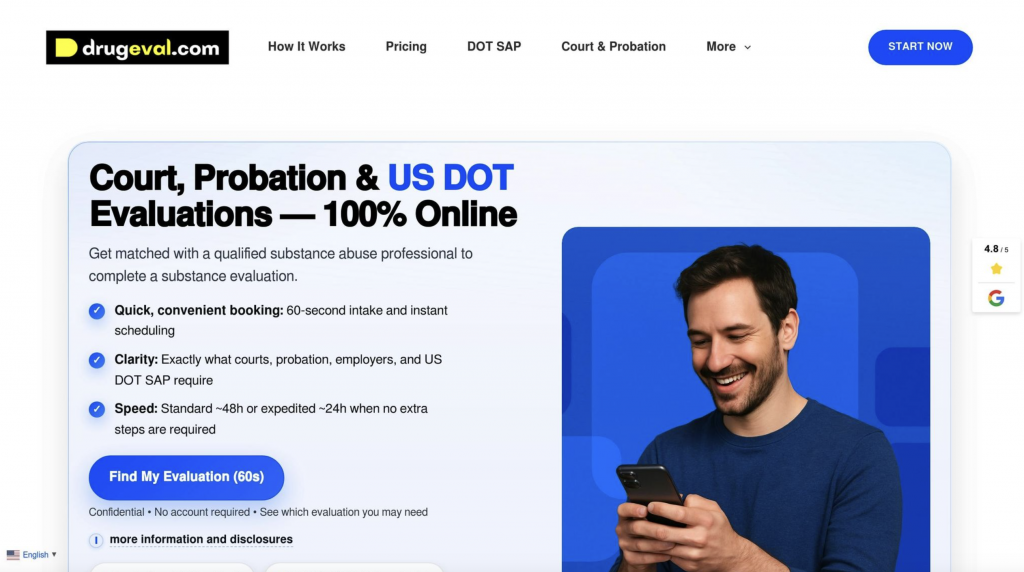
DrugEval.com builds on the ASAM criteria to deliver evaluations that are both comprehensive and efficient. Their three-step process ensures all six ASAM dimensions are thoroughly addressed. Here’s how it works:
- Online Booking and Questionnaire: Patients start by scheduling an appointment online. They then complete a detailed questionnaire that covers their substance use history, current situation, and personal factors relevant to the ASAM dimensions. This step ensures the video session is focused and productive.
- Video Consultation: During the consultation, licensed addiction counselors conduct ASAM-based assessments. They evaluate critical areas such as withdrawal risk, physical health conditions, emotional and behavioral concerns, readiness for treatment, relapse potential, and living environment. Counselors use shared decision-making and motivational interviewing techniques, particularly when addressing Dimension 6: Person-Centered Considerations.
- Comprehensive Report: After the evaluation, patients receive a detailed 9- to 10-page report. This report includes treatment recommendations aligned with the appropriate ASAM Level of Care and is widely accepted by courts, probation officers, and attorneys across the United States.
DrugEval.com offers two pricing options: $199 for a standard 48-hour turnaround or $249 for expedited 24-hour service. This streamlined process ensures patients receive timely and actionable recommendations while maintaining the highest standards of care.
Conclusion and Key Takeaways
The ASAM Criteria 4th Edition serves as the benchmark for aligning patients with the right addiction treatment options. By utilizing multidimensional assessments, it creates tailored treatment plans that cater to individual needs.
Telehealth has emerged as a key component in modern addiction evaluations. The 4th Edition dedicates an entire chapter, “Telehealth and Other Health Technologies,” to emphasize its growing importance in improving access to care. Tools like ASAM CONTINUUM and data-driven electronic medical records (EMRs) play a critical role in reducing assessment errors and addressing social barriers that can hinder access to treatment.
Platforms like DrugEval.com put these ASAM principles into action by offering secure telehealth evaluations conducted by certified addiction counselors. Their detailed 9-10 page reports, delivered within 24–48 hours, ensure treatment recommendations are both timely and aligned with current evidence-based standards. This seamless integration of ASAM guidelines with telehealth highlights the article’s central theme: blending innovation with proven care practices.
FAQs
How do the ASAM Levels of Care guide personalized addiction treatment?
The ASAM Levels of Care offer a clear framework to ensure people receive treatment that fits their specific needs. By evaluating key areas like medical history, mental health, social environment, and readiness for change, providers can identify the most suitable level of care for each individual.
This method helps align patients with the right level of support – whether it’s outpatient care or more intensive residential treatment. The goal is to create a treatment plan tailored to their unique challenges and objectives, setting the stage for more effective recovery outcomes.
How does telehealth support ASAM-based evaluations for substance use treatment?
Telehealth has become a key tool in expanding access to ASAM-based evaluations, making the process more convenient and efficient for both patients and clinicians. Through secure video conferencing and digital assessment tools, healthcare providers can perform detailed, multidimensional evaluations remotely, eliminating the need for patients to travel.
These virtual solutions facilitate real-time interactions, allowing providers to assess the physical, emotional, and social factors that shape each patient’s treatment needs. This method not only simplifies the process but also ensures more personalized care, particularly for those living in rural or underserved communities.
How do the six ASAM dimensions guide treatment recommendations?
The six ASAM dimensions serve as a detailed framework for evaluating an individual’s clinical needs and determining the most suitable level of care. These dimensions take into account key factors such as the risk of intoxication or withdrawal, physical health issues, emotional and cognitive challenges, readiness for change, likelihood of relapse, and the overall recovery environment.
By thoroughly assessing each dimension, clinicians can develop a clear, personalized understanding of what type of care – whether it’s outpatient, intensive outpatient, residential, or medically managed treatment – will best support the individual’s recovery. For example, someone experiencing severe withdrawal symptoms or dealing with complex medical conditions might require medically supervised detox. On the other hand, a person with strong motivation and a reliable support system could benefit from outpatient care. This approach ensures that every treatment plan is customized to address the unique needs of the patient throughout their recovery journey.
Ready to book your evaluation?
It’s confidential and takes about 60 seconds to get matched to the right evaluation and a qualified substance abuse professional.
Find My Evaluation