.pulse-btn { display: inline-block; padding: 12px 28px; background-color: #0066ff; color: white; font-weight: bold; text-decoration: none; border-radius: 9999px; /* pill shape */ transition: transform 0.2s ease; animation: pulse 1.5s infinite; } .pulse-btn:hover { transform: scale(1.05); } @keyframes pulse { 0% { box-shadow: 0 0 0 0 rgba(0,102,255,.7); } 70% { box-shadow: 0 0 0 15px rgba(0,102,255,0); } 100% { box-shadow: 0 0 0 0 rgba(0,102,255,0); } } /* Optional: respect reduced motion */ @media (prefers-reduced-motion: reduce){ .pulse-btn { animation: none; } }

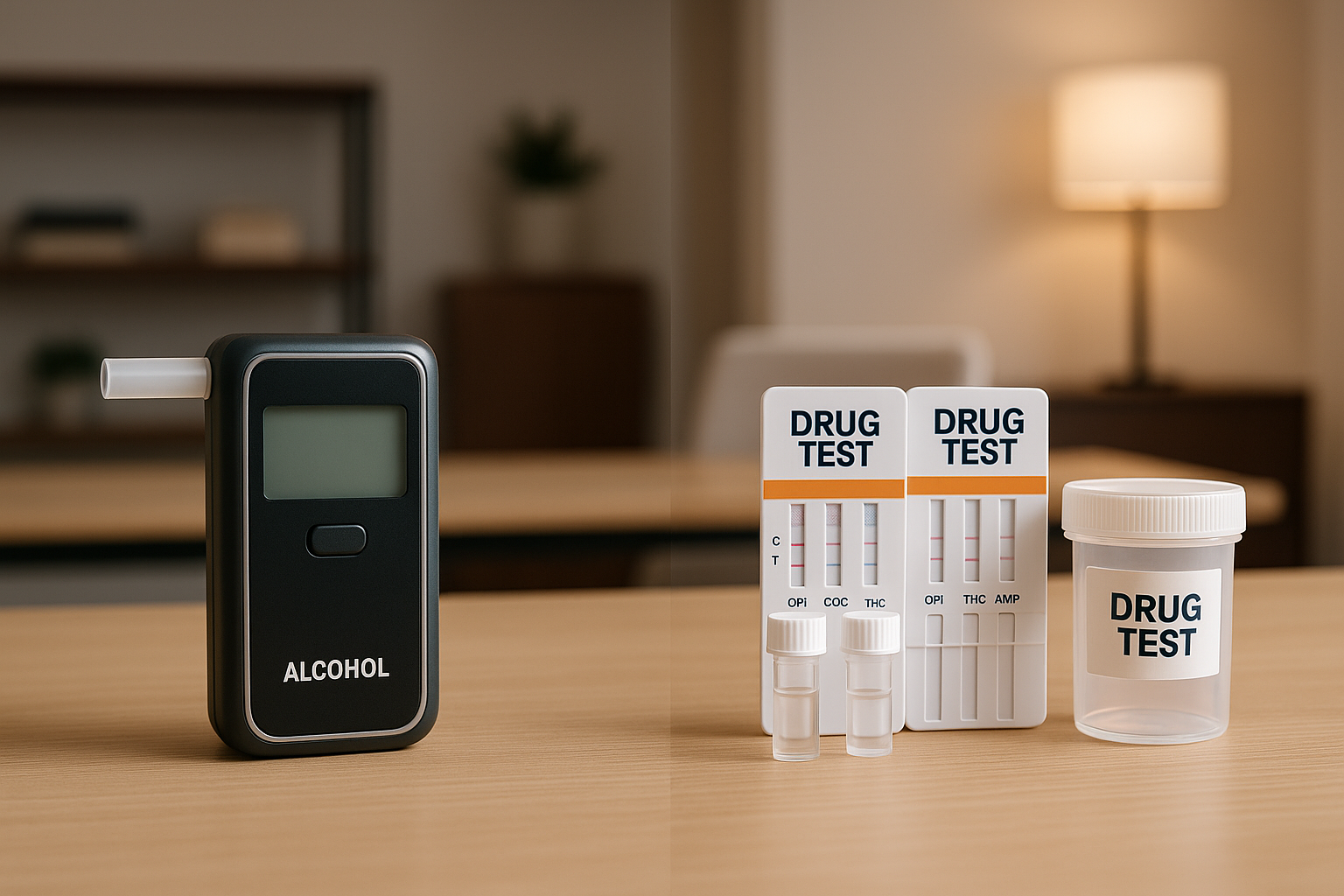
Drug vs. Alcohol Violations Under DOT Rules: Key Differences & Implications
When it comes to DOT rules, drug and alcohol violations are treated differently because of the unique nature of each substance. Here’s what you need to know:
- Drug violations involve substances like marijuana, cocaine, opioids, amphetamines, and PCP. Testing is done through urine or oral fluid samples, detecting past use. Any positive result, tampering, or refusal is a violation.
- Alcohol violations are based on blood alcohol concentration (BAC). A BAC of 0.04% or higher while on duty is a breach. Testing is typically done with breathalyzers, focusing on current impairment.
- Both violations require immediate removal from safety-sensitive work and an evaluation by a Substance Abuse Professional (SAP) before returning to duty.
Quick Comparison
| Aspect | Drug Violations | Alcohol Violations |
|---|---|---|
| Substances Tested | Marijuana, cocaine, opioids, amphetamines, PCP | Alcohol (BAC measured) |
| Violation Threshold | Any detectable amount | BAC of 0.04% or higher |
| Testing Method | Urine or oral fluid | Breathalyzers (preferred), saliva, or urine |
| Detection Window | Days to weeks | 15 minutes to 24 hours |
| Post-Accident Testing | Required with chain-of-custody procedures | Must be done within 2-8 hours |
Violations impact both employees and employers. Employees must complete the SAP process, including follow-up testing, and violations are recorded in the DOT Clearinghouse. Employers are responsible for compliance, documentation, and providing SAP resources. Telehealth services now streamline SAP evaluations, making the process faster and more accessible.
DOT regulations are strict to ensure public safety. Understanding these differences helps everyone stay compliant and protect lives.
DOT Drug Violations Explained
DOT drug violations go beyond just testing positive for drugs. For employees and employers in safety-sensitive roles, understanding what constitutes a violation and how testing works is crucial.
Types of DOT Drug Violations
There are several ways someone can violate DOT drug regulations, including testing positive, tampering with test samples, refusing to test, or misusing prescription medications. Let’s break these down:
- Positive Test Results: A positive result occurs when lab analysis detects any of the five substances on the DOT testing panel: marijuana (THC), cocaine, amphetamines, phencyclidine (PCP), or opioids. This includes misuse of prescribed medications within the opioid category.
- Adulterated or Substituted Specimens: Tampering with a test is another violation. Adulterated specimens may contain foreign substances like bleach, while substituted specimens might be replaced with water or synthetic urine. Both are serious attempts to manipulate the results.
- Test Refusals: Refusing to test can happen in several ways – outright refusal to provide a sample, failing to show up for testing, leaving the collection site early, or not providing enough urine without a valid medical reason.
- Prescription Medication Misuse: Employees using prescribed opioids or amphetamines must have a valid prescription and avoid performing safety-sensitive duties while impaired. A Medical Review Officer evaluates positive results to determine if they align with legitimate medical use.
DOT Drug Testing Process
DOT drug testing is governed by strict rules outlined in 49 CFR Part 40 to ensure accuracy and fairness. The primary method is urine testing, conducted under tightly controlled conditions to maintain a secure chain of custody. Collection sites must meet specific security standards, and collectors are required to be trained and certified.
As of June 1, 2023, oral fluid testing is now an approved alternative. This method is particularly useful in situations where urine collection is difficult. Regardless of the method, the testing process involves two steps: an initial screening followed by confirmatory testing. Each substance has specific cut-off levels to determine violations:
| Substance | Initial Test (ng/mL) | Confirmatory Test (ng/mL) |
|---|---|---|
| Marijuana (THC) | 50 | 15 |
| Cocaine | 150 | 100 |
| Amphetamines | 500 | 250 |
| PCP | 25 | 25 |
| Opioids | 2,000 | 2,000 |
For 2025, the Federal Motor Carrier Safety Administration (FMCSA) requires random drug testing at a 50% rate, while the Federal Aviation Administration (FAA) mandates a 25% rate.
“Employers must stay informed about the requirements, timelines, and procedures outlined by the DOT to align their drug and alcohol testing program accordingly.” – U.S. Department of Transportation
Additionally, all laboratories handling DOT specimens must be certified and adhere to strict quality control standards. These detailed procedures ensure the integrity and reliability of the testing process.
Required Actions After a Drug Violation
When a drug violation occurs, the employee must immediately be removed from safety-sensitive duties. DOT regulations mandate that the individual be referred to a Substance Abuse Professional (SAP) for evaluation. The SAP will determine the necessary education or treatment required before the employee can return to work.
After completing the recommended program, the employee must pass a return-to-duty test. They may also face follow-up testing as directed by the SAP. Employers are responsible for keeping detailed records of the violation, SAP evaluation, treatment completion, and the return-to-duty process.
For added convenience, telehealth options from DrugEval.com provide DOT-compliant SAP evaluations, making the process more accessible.
DOT Alcohol Violations Explained
DOT alcohol violations come with specific thresholds and restrictions that differ from drug-related rules. For those in safety-sensitive transportation roles, understanding these regulations is critical, as violations can happen even if alcohol isn’t consumed while on duty. Below are the key criteria that outline what constitutes an alcohol violation.
Alcohol Violation Criteria
DOT regulations clearly define what qualifies as an alcohol violation, going beyond just being intoxicated at work. Here are the main points:
- A blood alcohol concentration (BAC) of 0.04% or higher while reporting for duty or performing safety-sensitive tasks is considered a violation.
- Using alcohol while on duty and performing safety-sensitive functions is strictly prohibited.
- Employees must avoid alcohol for at least four hours before starting safety-sensitive duties. For emergency duties, this restriction begins as soon as the employee is notified.
- After an accident where alcohol involvement hasn’t been ruled out, employees are required to abstain from alcohol for eight hours or until a post-accident test is completed.
- Possessing alcohol while on duty or operating a commercial vehicle is forbidden, unless it is part of a documented shipment.
- Refusing to take an alcohol test also constitutes a violation.
Understanding and adhering to these guidelines is essential for maintaining compliance and ensuring safety in transportation roles. Violations can lead to serious consequences, both professionally and legally.
Ready to book your evaluation?
It’s confidential and takes about 60 seconds to get matched to the right evaluation and a qualified substance abuse professional.
Find My EvaluationDrug vs. Alcohol Violations: Side-by-Side Comparison
Knowing how drug and alcohol violations differ under DOT regulations is essential for both employees and employers aiming to stay compliant. While both types of violations are treated seriously, the methods for testing, detection windows, and thresholds vary significantly. Below, we break down these differences in substances, testing methods, and their broader implications.
Substances and Testing Limits
DOT drug testing focuses on identifying five specific substance categories: amphetamines, opioids, cocaine, marijuana, and phencyclidine (PCP). A drug violation occurs when any traceable amount of these substances or their metabolites is detected in an employee’s system.
Alcohol violations are measured differently. They occur when an employee’s blood alcohol concentration (BAC) reaches 0.04% or higher while performing safety-sensitive duties. Additionally, employees with a BAC between 0.02% and 0.039% must be removed from these duties for at least 24 hours, though this doesn’t qualify as a formal violation requiring SAP evaluation.
Detection windows for these substances also vary. Drug tests can detect usage from days or even weeks ago, depending on the substance and frequency of use. In contrast, alcohol tests identify current intoxication, typically within a 15-minute to 24-hour window.
Testing Methods and Equipment
The tools and procedures for drug and alcohol testing are distinct. Drug tests primarily rely on urine samples, which are analyzed to detect the five DOT-specified substances. These tests follow strict chain-of-custody protocols outlined in 49 CFR Part 40, and all results are reviewed by a Medical Review Officer (MRO) to confirm accuracy and account for legitimate medical explanations.
Alcohol testing, on the other hand, typically uses breath tests for immediate, on-the-spot results. DOT regulations mandate the use of approved Evidential Breath Testing (EBT) devices, which produce legally valid results. While urine and saliva tests can also detect alcohol, breath tests are preferred for their speed and reliability.
Post-accident testing further highlights the differences. Alcohol tests must be conducted within two hours of an incident, and if not completed within eight hours, the employer must document the reason for the delay. Drug testing, while also required promptly, focuses on identifying substances that may have impaired the employee before the accident.
Complete Comparison Table
| Aspect | Drug Violations | Alcohol Violations |
|---|---|---|
| Substances Tested | Amphetamines, opioids, cocaine, marijuana, PCP | Alcohol (measured as BAC) |
| Violation Threshold | Any detectable amount of specified substances | 0.04% BAC or higher |
| Primary Testing Method | Urine samples | Breath tests (breathalyzers) |
| Alternative Methods | Oral fluid tests (limited use) | Urine tests, saliva tests |
| Detection Window | Days to weeks depending on substance | 15 minutes to 24 hours |
| Post-Accident Testing | Required with chain of custody procedures | Must occur within 2 hours, documented if delayed beyond 8 hours |
| Result Verification | Medical Review Officer (MRO) reviews all results | Direct results from approved testing devices |
| Removal Threshold | Positive result for any of five substances | 0.02% BAC (24-hour removal), 0.04% BAC (violation) |
| Random Testing Rate | Minimum 25% of safety-sensitive employees annually | Varies by industry, includes random protocols |
These differences shape how employers and employees respond to violations. DOT’s strict protocols aim to ensure safety across the board, and the numbers speak for themselves: approximately 65% of workplace accidents are tied to substance abuse involving drugs or alcohol.
Regardless of the violation type, employees must undergo an evaluation by a Substance Abuse Professional (SAP) before returning to safety-sensitive work. The process for this evaluation, along with the testing and documentation requirements, reflects the unique challenges posed by each substance type.
Impact on Employees and Employers
DOT substance use violations can disrupt careers and operational efficiency, demanding prompt and effective responses from both employees and employers.
Employee Consequences
When employees violate DOT drug or alcohol regulations – whether by testing positive, refusing a test, or tampering with specimens – they are immediately barred from performing safety-sensitive duties. They can only return after completing the required return-to-duty process.
This process begins with an evaluation by a qualified professional who determines the necessary education, treatment, and follow-up testing to align with regulatory standards and support the employee’s recovery. Upon returning to work, employees are subject to at least six unannounced follow-up tests in the first year, with some cases requiring monitoring for up to five years. Additionally, violations are permanently recorded in the DOT Clearinghouse, which can affect future job opportunities. For instance, starting November 18, 2024, CDL drivers with a prohibited status in the Clearinghouse will automatically lose their commercial driving privileges.
Employer Requirements
Employers play a critical role in managing DOT violations. They must document and report every violation, including SAP evaluations and the return-to-duty process, while ensuring compliance with DOT regulations.
One of the first steps is providing employees with a list of qualified SAPs. Employees cannot resume safety-sensitive duties until they have completed the necessary steps, including a negative return-to-duty test and SAP clearance.
Employers are also responsible for scheduling and monitoring follow-up tests as directed during the prescribed testing period. Additionally, they must maintain updated written policies that detail testing procedures, consequences, and available resources for support. Non-compliance can result in serious repercussions, such as fines, civil penalties, DOT audits, and damage to the company’s reputation.
| Requirement | Employee Responsibility | Employer Responsibility |
|---|---|---|
| Immediate removal from duty | Stop performing safety-sensitive functions | Remove the employee from duty |
| SAP evaluation | Complete the SAP assessment | Provide contact information for qualified SAPs |
| Return-to-duty testing | Pass a return-to-duty test | Ensure a negative test result before resuming work |
| Follow-up testing | Participate in unannounced tests | Schedule and oversee follow-up testing |
| Documentation/Reporting | N/A | Record and report all violations |
To help manage these responsibilities, telehealth services are becoming a valuable tool.
How Telehealth Helps Manage Violations
Telehealth services simplify the management of DOT violations by offering remote access to qualified SAPs. This approach eliminates the need for travel, saving time and reducing disruptions – especially for employees in remote or underserved areas.
One major advantage of telehealth is its speed. Evaluations can often be completed within 24 to 48 hours, allowing employees to begin the return-to-duty process sooner. For example, DrugEval.com provides standard DOT SAP evaluations for $539, which includes initial and follow-up sessions. An expedited option is available for $589, ensuring completion within 24–48 hours.
Additionally, telehealth platforms streamline documentation and scheduling, helping employers maintain compliance while reducing administrative workloads. By minimizing logistical challenges, telehealth ensures a smoother and more accessible process for both employees and employers.
Managing DOT Substance Use Violations
Navigating DOT substance use violations requires understanding the differences between drug and alcohol violations and taking clear, actionable steps to address them.
Key Points for Employees and Employers
While drug and alcohol violations share similar repercussions, the way they are identified and managed differs. Drug violations are detected through laboratory testing of urine or oral fluid samples for substances like marijuana, cocaine, amphetamines, opioids, and PCP. A test result that is positive, adulterated, or substituted is considered a violation. On the other hand, alcohol violations are determined through breath alcohol concentration (BAC) tests. For most safety-sensitive employees, a BAC of 0.04% or higher constitutes a violation.
Both types of violations require an evaluation by a Substance Abuse Professional (SAP). Drug violations involve more intricate testing processes, often reviewed by a Medical Review Officer, while alcohol testing typically uses on-site breathalyzers for evidential confirmation.
Employees found in violation must complete follow-up testing as required. SAPs can also extend monitoring for up to five years, ensuring ongoing compliance. Additionally, all violations are reported to the DOT Clearinghouse, which can have a lasting impact on future employment opportunities.
Employers play a critical role in ensuring compliance. They are responsible for reporting violations, providing employees with SAP resources, and adhering to federal testing standards. Employees cannot return to safety-sensitive duties until they complete the full return-to-duty process, which includes obtaining a negative test result and clearance from a SAP. This process underscores the importance of timely action and precise documentation.
Steps to Address Violations
Here’s a straightforward approach to managing DOT substance use violations:
- Act Immediately:
Remove the employee from safety-sensitive duties and arrange for a SAP evaluation without delay. - Follow SAP Recommendations:
Ensure the employee completes all SAP-recommended education or treatment and obtains clearance to return to duty. - Leverage Telehealth Options:
Use telehealth SAP evaluations to speed up the process and minimize downtime. - Maintain Thorough Records:
Document all violation details and follow-up testing to ensure compliance. Collaboration among employers, employees, and testing facilities is crucial during the follow-up testing period.
FAQs
What steps must an employee follow to resume safety-sensitive duties after a DOT drug or alcohol violation?
After a DOT drug or alcohol violation, employees are required to go through the return-to-duty process. This starts with an evaluation by a certified Substance Abuse Professional (SAP), who will determine the necessary treatment or education. The employee must complete these recommendations successfully. Following that, they need to pass a Federal return-to-duty test – this could involve drug and/or alcohol testing, depending on the nature of the violation – before they can return to safety-sensitive duties. In many cases, ongoing follow-up testing is also part of the process.
How do telehealth services improve the SAP evaluation process for DOT violations, and what benefits do they offer to employees and employers?
Telehealth services have transformed the way SAP (Substance Abuse Professional) evaluations are conducted for DOT violations. By allowing employees to complete these mandatory evaluations from their homes, telehealth eliminates the need for travel and minimizes disruptions to their work schedules. This approach is particularly helpful for those living in remote areas or juggling demanding jobs.
From an employer’s perspective, telehealth simplifies compliance with DOT regulations. It speeds up the evaluation process, enabling employees to resume safety-sensitive roles more quickly. Plus, telehealth ensures employees have access to certified SAP professionals no matter where they are, maintaining consistent and reliable evaluations. The result? Time saved, costs reduced, and a safer workplace for everyone involved.
Why does the DOT handle drug and alcohol violations differently, and what does that mean for testing and managing these violations?
The Department of Transportation (DOT) enforces strict rules to ensure the transportation industry remains free of drugs and alcohol, as detailed in 49 CFR Part 40. While violations involving drugs and alcohol are both taken seriously, they are handled differently due to variations in testing methods, detection periods, and associated risks. For instance, alcohol tests typically reveal recent consumption, whereas drug tests can detect use over a longer timeframe.
These differences influence how violations are managed. Each DOT agency sets specific guidelines that outline who must be tested, when testing occurs – such as during pre-employment, randomly, or after an incident – and how violations are addressed. Both employers and employees are responsible for following these regulations to maintain compliance and ensure safety throughout the transportation industry. A clear understanding of these distinctions allows organizations to navigate testing procedures and address violations effectively.
Ready to book your evaluation?
It’s confidential and takes about 60 seconds to get matched to the right evaluation and a qualified substance abuse professional.
Find My Evaluation