.pulse-btn { display: inline-block; padding: 12px 28px; background-color: #0066ff; color: white; font-weight: bold; text-decoration: none; border-radius: 9999px; /* pill shape */ transition: transform 0.2s ease; animation: pulse 1.5s infinite; } .pulse-btn:hover { transform: scale(1.05); } @keyframes pulse { 0% { box-shadow: 0 0 0 0 rgba(0,102,255,.7); } 70% { box-shadow: 0 0 0 15px rgba(0,102,255,0); } 100% { box-shadow: 0 0 0 0 rgba(0,102,255,0); } } /* Optional: respect reduced motion */ @media (prefers-reduced-motion: reduce){ .pulse-btn { animation: none; } }

DOT SAP Follow-Up Testing: What Happens After You Return to Duty
If you’ve violated DOT drug or alcohol regulations, returning to a safety-sensitive role involves more than passing a single test. Follow-up testing is a mandatory step that ensures accountability and public safety. Here’s what happens:
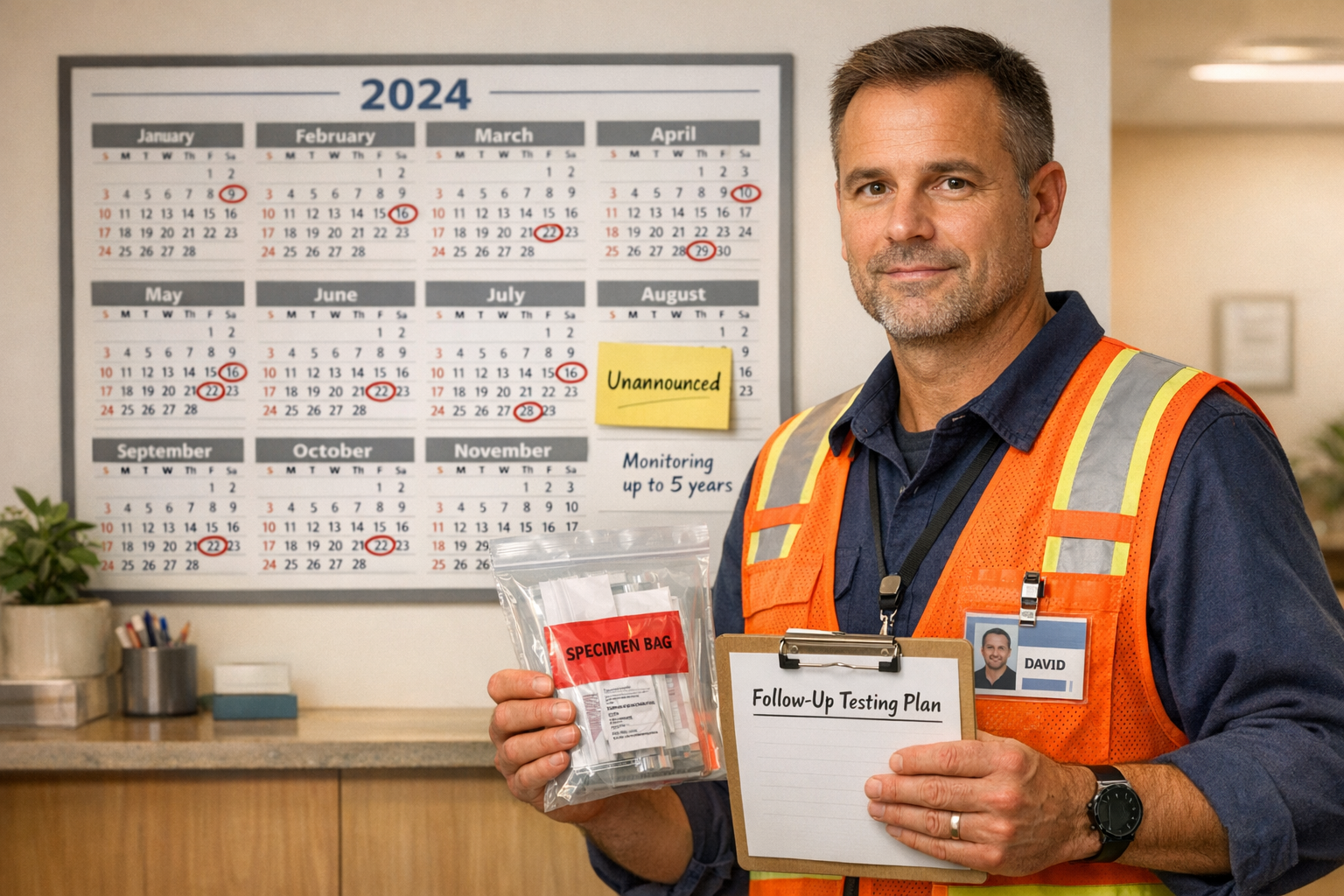
- Follow-Up Testing: After completing the return-to-duty process, you’ll face at least six unannounced tests in the first 12 months. Testing can extend up to five years based on your Substance Abuse Professional’s (SAP) evaluation.
- Direct Observation: All follow-up tests are conducted under direct observation to maintain sample integrity.
- Employer’s Role: Your employer schedules these tests randomly and cannot share the schedule with you.
- Employee’s Responsibility: You must comply immediately when notified of a test. Missing or failing a test restarts the entire SAP process.
- Transferable Plan: If you change jobs, your follow-up testing plan follows you.
Costs, compliance, and strict timelines make organization and adherence critical. Failing a follow-up test results in removal from duty, resetting your progress, and additional penalties. Staying compliant ensures a smoother path back to work.
When Follow-Up Testing Begins
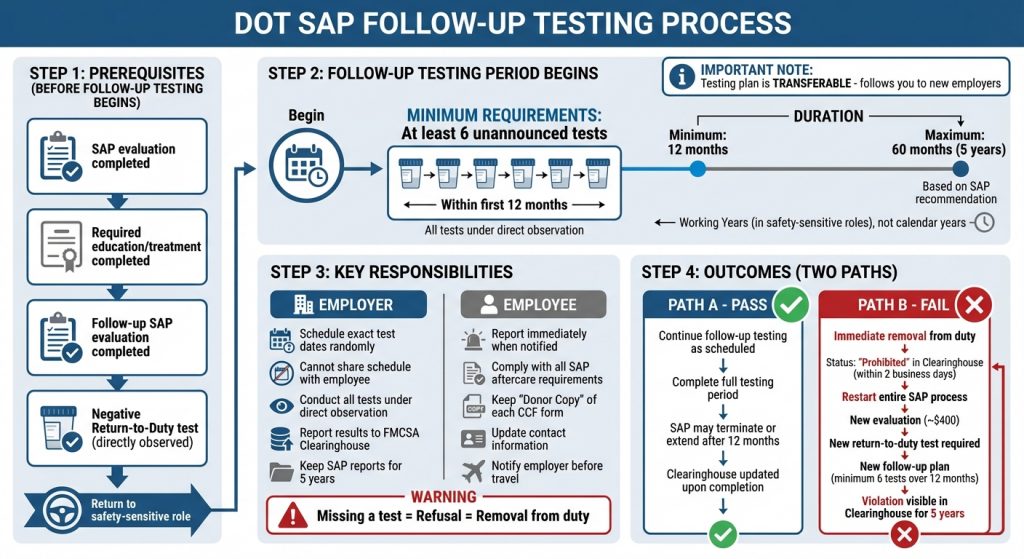
Follow-up testing kicks off only after completing every step of the return-to-duty process. This includes the SAP (Substance Abuse Professional) evaluation, any required education or treatment, a follow-up evaluation, and a negative result from a directly observed Return-to-Duty test. Once you’re back in a safety-sensitive role, the testing plan officially goes into effect. Here’s how the timing and frequency of this phase works.
Timing of the First Follow-Up Test
The first follow-up test can happen at any point after you return to duty. Your SAP creates a written plan that outlines the number of tests and whether they’ll screen for drugs, alcohol, or both. However, your employer is responsible for scheduling these tests randomly and without prior notice.
“The SAP is the sole determiner of the number and frequency of follow-up tests and whether these tests will be for drugs, alcohol, or both.” – DOT Rule 49 CFR Part 40 Section 40.307
This unannounced approach ensures continuous accountability throughout the process.
Frequency and Randomness of Tests
Federal regulations require at least six unannounced follow-up tests within the first 12 months after completing the return-to-duty process. However, your SAP may recommend additional tests based on factors like the severity of your violation or your history with substance abuse. The testing period itself can last up to 60 months (or five years), depending on your specific situation.
One key requirement is that these tests must be random. While your employer selects the test dates, they must remain unpredictable and spread out over the testing period. Missing a test is treated as a refusal, which leads to immediate removal from duty and resets the SAP process entirely. To avoid any issues, make sure your employer has your up-to-date contact details and inform them if you’re planning to travel.
Key Components of a DOT SAP Follow-Up Plan
The follow-up testing plan is a crucial part of your return-to-duty process. It’s a personalized roadmap that ensures you stay accountable and compliant with DOT regulations.
How the SAP Determines the Plan
Your Substance Abuse Professional (SAP) creates a follow-up testing plan based on a thorough clinical assessment. This evaluation considers several factors, including your history of substance use, mental health background, the severity of your DOT violation, and your progress in any required education or treatment programs.
The plan is finalized only after you complete all SAP-recommended steps, such as attending a 12-hour education program or undergoing outpatient counseling. Once the SAP confirms your compliance, they outline the follow-up testing plan, specifying whether you’ll be tested for drugs, alcohol, or both. For instance, if you initially tested positive for drugs but the SAP identifies an alcohol issue during the assessment, they may require testing for both substances.
The SAP also takes into account whether this is your first violation or a repeat offense. Repeat violations typically result in more intensive treatment requirements and longer testing periods. While the SAP determines the type and frequency of tests, your employer is responsible for scheduling them randomly, without advance notice.
This custom approach defines not only the substances you’ll be tested for and the frequency of tests but also establishes the timeline you’ll need to follow to maintain compliance.
Duration of Follow-Up Testing Program
Once your plan is set, its duration is governed by DOT regulations and clinical recommendations. DOT rules require a minimum follow-up testing period of 12 months, during which at least six unannounced tests must be conducted. However, depending on your clinical history, the nature of your violation, and your progress during treatment, the SAP can extend the testing program for up to 60 months (five years).
After the required 12 months, the SAP has the discretion to either terminate or extend the program based on your compliance and progress. If you’ve demonstrated consistent compliance and no further risks are identified, the SAP may decide to end the program early. On the other hand, if concerns remain, the testing period can be extended.
An important point to remember: your follow-up testing plan is transferable. If you change jobs or experience a break in employment, your new employer is legally obligated to continue the remaining tests outlined in your SAP’s plan. This ensures that compliance is maintained regardless of employment changes.
Employer and Employee Responsibilities
In a DOT SAP follow-up plan, both employers and employees have clearly defined roles to ensure compliance. Success hinges on each party fulfilling their specific responsibilities. The DOT makes it clear: these duties are non-negotiable and cannot be reassigned or altered.
Employer’s Role in Follow-Up Testing
Once your SAP outlines the follow-up testing plan, your employer takes on specific tasks. They are responsible for scheduling the exact dates for each unannounced test. While the SAP determines the number and timing of tests, employers are prohibited from sharing this schedule or its details with you.
“As the employer, SAP, or other service agent, you must not provide to the employee a copy of their drug and/or alcohol follow-up testing schedule prescribed by the SAP.” – DOT Rule 49 CFR Part 40 Section 40.307
Every test must be conducted under direct observation by an observer of the same gender. Employers must follow this rule to avoid compliance issues. They are also required to report your negative return-to-duty test result and the successful completion of your testing plan to the FMCSA Clearinghouse. Additionally, all SAP reports must be kept on file for five years from the date they are received.
It’s important to note that employers cannot impose additional tests beyond what the SAP has prescribed. The follow-up plan created by the SAP is the only testing requirement you need to meet. While employers handle scheduling and reporting, employees are responsible for meeting their own obligations.
Employee’s Role in Compliance
As an employee, your role is to follow every SAP directive without deviation. When notified of a test, you must report immediately; all tests are unannounced.
If your SAP plan includes aftercare requirements, these are mandatory, not optional. David Perlman, a US DOT Qualified Substance Professional, emphasizes:
“If the SAP includes [aftercare requirements], they are not recommendations, they are requirements. An auditor may ask for proof that an employee completed all aftercare requirements”.
Keep the “Donor Copy” of each Custody and Control Form (CCF) as proof of compliance. This is especially important if you change jobs before completing your follow-up plan. In such cases, your new employer assumes responsibility for your testing, but maintaining your own records ensures you’re covered in case of documentation gaps.
Consequences of Failing Follow-Up Tests
Failing a follow-up test under DOT regulations comes with serious repercussions, both immediate and long-term. These consequences can disrupt your career and make it challenging to regain compliance.
Immediate Impact of a Positive Test
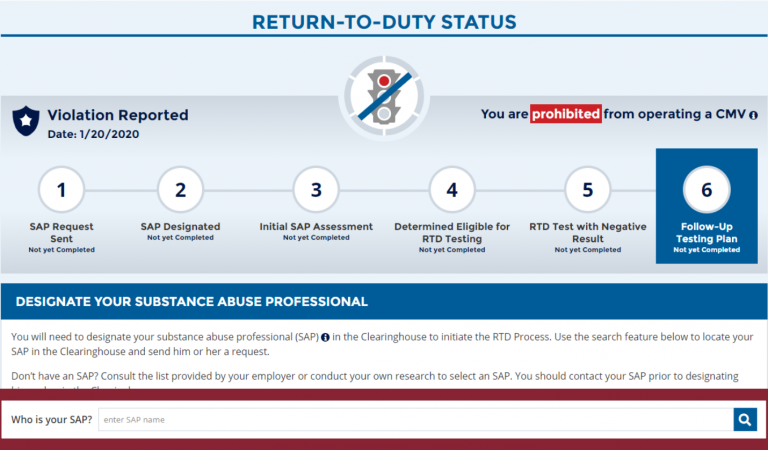
A failed follow-up test has instant effects. DOT regulations require your immediate removal from all safety-sensitive duties – whether that’s driving a commercial vehicle, piloting an aircraft, or managing train operations. This ensures public safety remains the top priority.
Within two business days, the violation is reported to the FMCSA Drug and Alcohol Clearinghouse, and your status changes to “Prohibited”. This designation notifies DOT-regulated employers that you’re no longer eligible for safety-sensitive roles.
Attempting to work in a safety-sensitive role after failing a test can lead to steep fines, CDL disqualification, and other penalties. These immediate measures are designed to enforce compliance and set the tone for the more enduring consequences that follow.
Long-Term Consequences for DOT Compliance
A failed follow-up test resets your progress in the DOT SAP process. Even if you’d been making headway, you’ll need to start over. This begins with a new SAP evaluation, which typically costs around $400, and may require a more intensive treatment plan. After completing this step, you’ll need to pass a directly observed return-to-duty test before resuming work.
Once you’re cleared to return, a new follow-up testing schedule begins. This includes at least six unannounced tests in the first 12 months, with monitoring potentially extending up to five years. Additionally, your violation remains visible in the Clearinghouse for five years or until you successfully complete the SAP process.
While DOT regulations don’t explicitly require termination, many employers enforce strict policies that result in permanent dismissal after a second violation. Whether you’re rehired or retained is often left to the employer’s discretion.
Conclusion
Completing DOT SAP follow-up testing is essential for regaining eligibility for safety-sensitive positions while ensuring compliance with DOT regulations and maintaining public safety. Typically, you’ll need to undergo at least six unannounced tests in the first 12 months, though your follow-up plan could extend for up to five years.
To help you stay on track, here are a few practical tips for managing compliance effectively.
Tips for Staying Compliant
Staying organized is crucial when handling your follow-up testing program. Always retain the “Donor Copy” of your Custody and Control Form (CCF) from each test. This serves as essential documentation, especially if your employer cannot transfer records. Since tests are unannounced, make sure to update your contact details with your employer and testing coordinator to avoid missed notifications.
If you plan to travel, notify your Designated Employer Representative in advance to prevent scheduling conflicts with unannounced tests. Remember, your testing timeline is based on “working years” in safety-sensitive roles, not calendar years. Any breaks in service will pause the clock, but your obligations remain intact. Keeping detailed records of your progress will help ensure you stay on schedule.
For additional guidance, consider how DrugEval.com can assist you through the process.
How DrugEval.com Can Support You
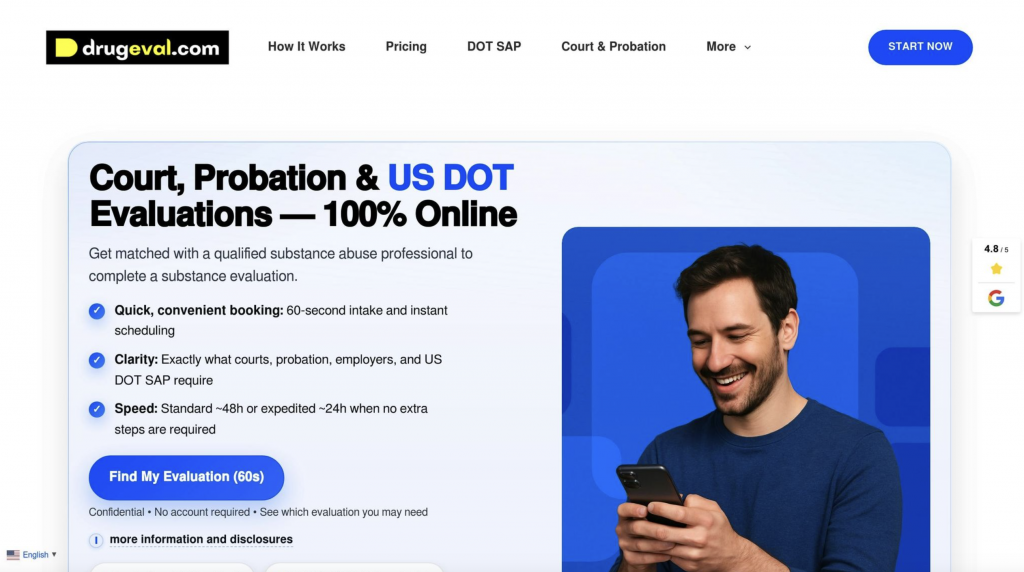
DrugEval.com simplifies the SAP evaluation process with the help of certified addiction counselors. They offer two service options: Regular DOT/SAP evaluations for $539 and Expedited DOT/SAP evaluations for $589, with documentation provided within 24 to 48 hours depending on your choice.
Their telehealth approach eliminates the need for travel while maintaining full DOT compliance. The process involves completing an online questionnaire, attending a video session with a licensed counselor, and receiving an evaluation report that meets all federal standards. Importantly, all SAPs at DrugEval.com are registered in the FMCSA Clearinghouse – a key qualification to confirm before starting.
Whether you’re beginning your evaluation or need follow-up documentation, DrugEval.com provides the tools and professional support to help you navigate this challenging process and return to work with confidence.
Ready to book your evaluation?
It’s confidential and takes about 60 seconds to get matched to the right evaluation and a qualified substance abuse professional.
Find My EvaluationFAQs
How do I prove I completed my follow-up tests?
To show you’ve completed your follow-up tests, make sure to keep records of all tests and evaluations. After your SAP evaluation and any necessary treatment, the SAP will send a report to your employer confirming that you’ve met the requirements. Be sure to keep copies of this report, your negative return-to-duty test results, and any official clearance documents as proof that you’ve successfully completed all follow-up testing and evaluations.
What should I do if I’m traveling when a test is called?
If you’re traveling when a DOT follow-up test is required, let your employer or designated employer representative (DER) know about your travel plans right away. They’ll work with you to arrange testing that meets the unannounced testing requirements. This could mean scheduling a test at an approved facility near your location or adjusting the timing if needed. Clear and timely communication is key to staying compliant with DOT regulations.
Can follow-up testing affect getting hired by a new employer?
Yes, follow-up testing can affect your chances of being hired by a new employer. Many employers, especially those in safety-sensitive industries, may review your compliance with ongoing testing requirements as part of their hiring process. Staying fully compliant with these testing protocols is crucial for maintaining your eligibility for such roles.
Ready to book your evaluation?
It’s confidential and takes about 60 seconds to get matched to the right evaluation and a qualified substance abuse professional.
Find My Evaluation